English
 عربى
عربى Español
Content
- 1 What Makes Silicone Rubber the Ideal Insulation Material for High-Temperature Wire
- 2 Key Performance Benefits of Silicone Insulated Heater Wire
- 3 Silicone Rubber Motor Lead Wire: Specific Requirements and Construction
- 4 Silicone Heating Wire: Construction and Operating Principles
- 5 Industrial and Commercial Applications of Silicone Insulated Wire
- 6 Common Standards and Certifications for Silicone Insulated Wire
- 7 Selecting the Right Silicone Insulated Wire for Your Application
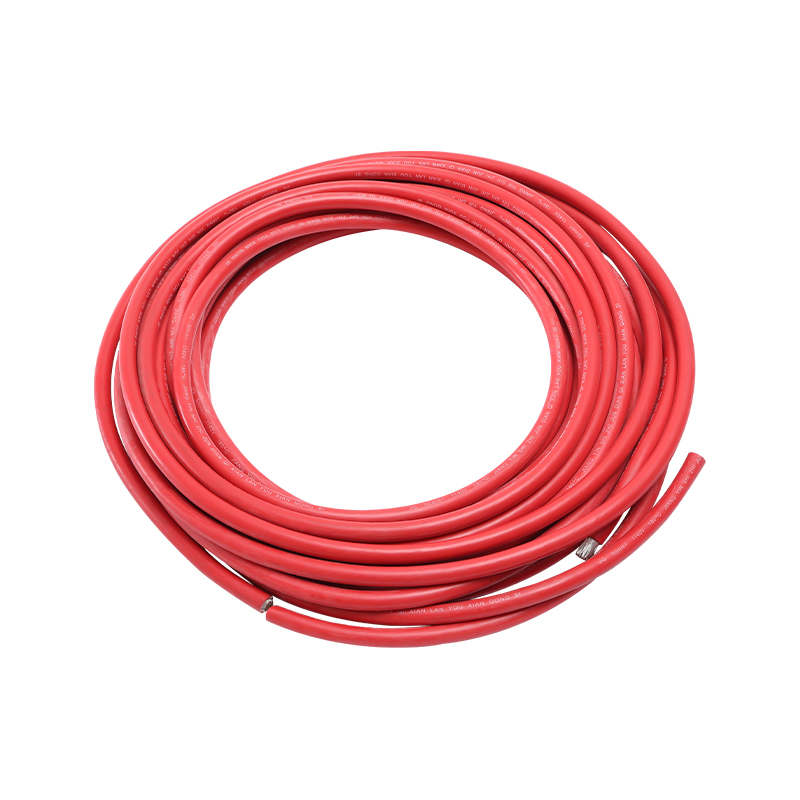
Silicone insulated heater wire — encompassing both silicone rubber motor lead wire and silicone heating wire — represents one of the most thermally capable and environmentally resilient electrical wire categories in industrial and commercial applications. Unlike PVC or thermoplastic-insulated wires that degrade, harden, and crack when exposed to sustained elevated temperatures, silicone rubber insulation maintains its flexibility, dielectric integrity, and mechanical properties across a temperature range that spans from -60°C to +200°C in standard grades and up to +300°C in high-temperature specialist formulations. This exceptional thermal performance, combined with resistance to moisture, ozone, UV radiation, and a broad range of chemicals, makes silicone insulated wire the preferred specification in electric motors, industrial heating systems, HVAC equipment, medical devices, and any application where long-term reliable electrical insulation under thermal stress is a fundamental requirement.
What Makes Silicone Rubber the Ideal Insulation Material for High-Temperature Wire
Silicone rubber is a synthetic elastomer based on a polymer backbone of alternating silicon and oxygen atoms — the siloxane linkage — rather than the carbon-carbon backbone that characterizes conventional organic rubbers and thermoplastics. This inorganic backbone confers a fundamental thermal stability advantage: the silicon-oxygen bond requires substantially more energy to break than a carbon-carbon bond, which is why silicone rubber retains its elastomeric properties at temperatures that cause organic insulators to melt, oxidize, or become brittle. The methyl or vinyl organic side groups attached to the siloxane backbone contribute to the material's low surface energy, hydrophobicity, and flexibility at low temperatures.
The compounding of silicone rubber insulation for wire applications involves selecting the appropriate base polymer, incorporating reinforcing fillers such as fumed silica to achieve the required mechanical strength, adding heat stabilizers and flame-retardant additives, and vulcanizing the compound — either by peroxide cure or platinum-catalyzed addition cure — to develop a cross-linked network that prevents the rubber from flowing under thermal load. The resulting insulation compound is then extruded over the conductor under controlled conditions, and the insulated wire passes through a vulcanization oven or salt bath to complete curing. The quality of the base compound, the precision of the extrusion process, and the completeness of vulcanization together determine the electrical, mechanical, and thermal performance of the finished wire insulation throughout its service life.
Key Performance Benefits of Silicone Insulated Heater Wire
The adoption of silicone rubber insulated wire in high-temperature and demanding applications is driven by a combination of performance advantages that alternative insulation materials cannot provide simultaneously. Each benefit addresses a specific failure mode or performance limitation that conventional wire insulations exhibit in thermal and environmental service conditions.
- Exceptional temperature resistance: Standard silicone wire insulation is rated for continuous operation at 180°C–200°C, with intermittent exposure tolerance to 250°C. High-temperature grades extend continuous service ratings to 250°C–300°C. This performance range covers the operating conditions of electric motor windings, heating element leads, oven wiring, and industrial process equipment that would cause PVC insulation — rated to 70°C–105°C — to fail within hours or days.
- Maintained flexibility at low temperatures: Silicone rubber remains flexible and pliable at temperatures as low as -60°C, far below the brittle point of PVC and most thermoplastic insulations. This cold-temperature flexibility makes silicone wire the standard specification for outdoor and refrigeration applications where wiring must be handled, routed, and connected in sub-zero conditions without risk of insulation cracking.
- Superior moisture and water resistance: Silicone rubber's inherently hydrophobic surface and low water absorption coefficient — typically below 0.5% — maintain dielectric properties in humid and wet environments. Silicone insulation does not absorb water in the way that some organic insulations do, preventing the reduction in electrical resistance and insulation breakdown that moisture causes in less resistant materials.
- Ozone and UV stability: Silicone rubber is inherently resistant to ozone and UV radiation — degradation mechanisms that cause surface cracking in natural rubber and some synthetic rubbers over time. This stability makes silicone wire suitable for outdoor installations and locations near high-voltage switchgear and corona discharge sources that would degrade conventional rubber insulations rapidly.
- Flame retardancy and halogen-free options: Silicone rubber insulated wire can be formulated to meet UL 94 V-0 and other flame retardancy classifications. When silicone rubber burns, it primarily produces silicon dioxide — a non-toxic, non-conductive residue — rather than the dense, toxic, and corrosive smoke produced by burning PVC. Halogen-free silicone formulations are increasingly specified in data centers, transportation, and public infrastructure where toxic smoke generation in fire conditions is a critical safety concern.
- Chemical resistance: Silicone insulation resists a broad range of industrial chemicals including dilute acids, alkalis, ketones, alcohols, and many oils and lubricants. This chemical compatibility makes silicone wire the appropriate specification in chemical processing equipment, automotive engine bays, and industrial machinery where exposure to process chemicals and fluids is unavoidable.
Silicone Rubber Motor Lead Wire: Specific Requirements and Construction
Silicone rubber motor lead wire is a specialized category of silicone insulated wire designed specifically for connecting the internal winding conductors of electric motors to the external power supply terminals. The motor lead wire must withstand the thermal environment generated by the motor windings — which can reach 155°C to 200°C in standard insulation class motors operating at rated load — while also resisting the mechanical stresses of installation in tight motor terminal boxes, repeated thermal cycling as the motor operates and cools, and exposure to the oils and coolants present in motor operating environments.
Motor lead wire constructions typically use finely stranded tinned copper conductors — with strand counts from 7 to over 100 individual wires per conductor depending on the flexibility requirement — to provide the combination of current-carrying capacity and mechanical flexibility needed for routing within the motor terminal box without stress on the conductor at bending points. Single-layer silicone rubber insulation is the standard construction for most motor lead wire applications, with wall thicknesses from 0.6 mm to 2.0 mm depending on the voltage rating and mechanical protection requirement. For demanding motor applications where abrasion resistance or additional mechanical protection is required alongside thermal performance, a glass fiber braid applied over the silicone insulation provides extra mechanical protection without significantly compromising flexibility or increasing conductor temperature.
| Wire Type | Temperature Rating | Voltage Rating | Conductor | Typical Application |
| Standard Motor Lead | 180°C / 200°C | 600V / 1000V | Stranded tinned copper | AC/DC motor connections |
| High-Temp Motor Lead | 200°C – 250°C | 600V / 1000V | Stranded tinned copper | Compressor motors, inverter drives |
| Silicone Heating Wire | 200°C – 300°C | 300V – 600V | Nichrome / resistance alloy | Heating elements, mats, cables |
| Glass Fiber Braided Silicone | 200°C | 600V / 1000V | Stranded tinned copper | Motors, transformers, high abrasion |
| UL Style 3132 / 3135 | 150°C / 200°C | 600V | Stranded tinned copper | Appliances, HVAC, lighting |
Silicone Heating Wire: Construction and Operating Principles
Silicone heating wire differs fundamentally from power supply wiring in that its conductor is selected for its resistive heating properties rather than for low resistance current transport. The conductor in a silicone heating wire is typically a resistance alloy — most commonly nickel-chromium (nichrome), iron-chromium-aluminum (FeCrAl), or copper-nickel alloy — whose electrical resistance per unit length generates heat by Joule heating when current flows through it. The silicone rubber insulation surrounding this resistance conductor serves to electrically isolate the heating element from its environment, distribute heat to the surrounding surface or medium, protect the resistance conductor from mechanical damage and oxidation, and provide the flexibility needed for the heating wire to conform to the shape of the object or surface it is intended to heat.
The power output per unit length of a silicone heating wire — expressed in watts per meter — is determined by the resistance per unit length of the conductor and the applied voltage. By selecting appropriate resistance alloy compositions, conductor diameters, and strand configurations, heating wire manufacturers can produce products with specific watt-per-meter ratings tailored to different heating applications. Higher watt-per-meter ratings produce more heat per unit length but also generate higher surface temperatures that must remain within the safe operating range of the silicone insulation. In practice, most silicone heating wire products are rated for surface temperatures up to 200°C–250°C, corresponding to the maximum continuous service temperature of the silicone insulation compound used.
Industrial and Commercial Applications of Silicone Insulated Wire
The combination of thermal performance, flexibility, and environmental resistance that silicone insulated wire provides makes it the specified solution across a wide range of demanding applications in industrial, commercial, and consumer product sectors.
Electric Motors and Rotating Machinery
Silicone rubber motor lead wire is used in AC induction motors, permanent magnet motors, stepper motors, servo motors, and hermetic compressor motors wherever the winding temperature class — typically Class H (180°C) or Class C (above 180°C) — requires insulation that exceeds the capability of standard PVC or thermoplastic wire. Inverter-driven motors that operate on variable frequency drives (VFDs) impose additional insulation stress through fast voltage rise times and voltage spikes that can accelerate insulation degradation — silicone rubber's good dielectric strength and partial discharge resistance make it well-suited to VFD motor terminal connections where these electrical stresses are concentrated.
HVAC, Refrigeration, and Appliance Industries
In HVAC and refrigeration equipment, silicone insulated wire connects heating elements, motor windings, and sensor circuits in environments combining elevated temperatures with refrigerant and lubricant oil exposure that would degrade conventional insulations. Residential and commercial appliances — ovens, dryers, dishwashers, air conditioning units, and heat pumps — use silicone motor lead wire for internal connections where proximity to heating elements or compressor motors creates thermal conditions beyond the capability of standard appliance wire. The silicone wire's resistance to the plasticizer migration and subsequent hardening that PVC wire undergoes in hot appliance environments delivers substantially longer service life and reduced warranty failure rates.
Industrial Heating Systems and Process Equipment
Silicone heating wire is used as the resistance element in flexible heating mats, pipe trace heating cables, freeze protection systems, and heat blankets used in industrial process applications. Its flexibility allows heating mats to conform to irregular pipe and vessel surfaces, maximizing thermal contact area. In the food and beverage, pharmaceutical, and chemical industries, silicone-jacketed heating cables are preferred because silicone rubber is food-safe, easy to clean, resistant to cleaning chemicals and steam, and compliant with FDA and EU food contact material regulations — making it suitable for installation in hygienic environments where other heating element materials would be unacceptable.
Automotive and Aerospace Applications
The automotive industry uses silicone insulated wire extensively in engine bay wiring, exhaust sensor circuits, ignition systems, and electric vehicle battery and motor connections — all environments where operating temperatures and chemical exposure exceed what PVC wiring can withstand reliably. In aerospace applications, silicone wire's combination of temperature performance, low smoke and toxicity under fire conditions, and stable dielectric properties across wide temperature excursions from sub-zero cruise altitudes to hot ground temperatures makes it the preferred wire insulation in aircraft interior wiring, engine accessory connections, and avionics cooling system wiring.
Common Standards and Certifications for Silicone Insulated Wire
Silicone insulated motor lead wire and heating wire are manufactured to a range of national and international standards that specify the construction, material, electrical, and mechanical requirements that products must meet for use in regulated applications. Selecting wire that carries appropriate third-party certification to applicable standards ensures compliance with installation codes and equipment safety regulations.
- UL 3132 / UL 3135 (USA): UL recognized component wire styles for silicone rubber insulated appliance wiring, rated at 150°C/600V and 200°C/600V respectively. Products listed to these styles are widely accepted by North American equipment manufacturers for motor lead and internal appliance wiring applications where UL compliance is required for equipment listings.
- IEC 60245 (International): IEC standard covering rubber insulated cables for fixed installations, including heat-resistant silicone rubber insulated cables designated under the IEC 60245 series. This standard is the basis for national standards in many countries outside North America and is the typical reference for European and international market applications.
- VDE Standards (Germany / Europe): VDE-certified silicone rubber wire products comply with German VDE requirements that closely align with IEC standards but include additional national requirements. VDE certification is respected throughout Europe and is a commonly specified requirement for industrial equipment sold in European markets.
- RoHS / REACH Compliance: For electronic equipment and consumer products sold in the European Union, silicone wire must comply with RoHS restrictions on hazardous substances and REACH chemical regulation requirements. Silicone rubber insulation is inherently compatible with RoHS requirements, but conductor plating materials and compounding additives must be verified for compliance in the specific wire product.
Selecting the Right Silicone Insulated Wire for Your Application
Choosing between the range of available silicone insulated wire products requires matching specifications to the specific thermal, electrical, mechanical, and regulatory requirements of the intended application. A systematic evaluation of each relevant parameter prevents under-specification that leads to premature failure and over-specification that adds unnecessary cost.
- Define the maximum continuous operating temperature: Determine the actual temperature the wire insulation will experience in the most demanding operating condition — not the ambient temperature alone, but the combination of ambient temperature plus heat generated by current flow in the conductor plus any additional heat conducted from nearby components such as motor windings or heating elements. Specify insulation temperature rating with a minimum 10–20°C margin above this calculated maximum.
- Verify current-carrying capacity at operating temperature: Conductor ampacity — the maximum safe current-carrying capacity — decreases at elevated temperatures because the conductor resistance increases with temperature, generating more heat per unit current. Always verify that the selected conductor cross-section provides adequate ampacity at the operating temperature, not just at the standard 25°C reference temperature used in most wire tables.
- Match flexibility to installation requirements: For applications requiring frequent flexing — flexible heater mats, portable equipment, articulated machine connections — specify highly stranded conductors with 50 or more individual strands and appropriate flexibility rating. For fixed motor lead connections that are routed once during assembly and thereafter static, a less flexible, more economical stranding can be specified without compromising service life.
- Confirm chemical compatibility with operating environment: While silicone rubber resists most industrial chemicals, it is attacked by concentrated acids, concentrated alkalis, and some specific organic solvents. Verify compatibility of the insulation compound with all chemicals the wire will contact in service — including cleaning agents used during maintenance — particularly in pharmaceutical, food processing, and chemical industry applications where aggressive cleaning protocols are standard.
- Identify applicable standards and certifications: Determine which standards and certification bodies govern the equipment in which the wire will be installed — UL for North American markets, VDE or CENELEC standards for European markets, specific industry standards for automotive, aerospace, or medical applications. Specify wire that carries the required certification marks from the relevant certification bodies, and request certification documentation from the supplier to verify authenticity before use in safety-critical applications.