English
 عربى
عربى Español
Content
- 1 What Is Teflon Cable?
- 2 Key Physical and Electrical Properties of PTFE Insulation
- 3 Types of Teflon Cable by Construction
- 4 Teflon Cable Properties at a Glance
- 5 Primary Industries and Applications for Teflon Cable
- 6 Handling and Installation Considerations
- 7 Selecting the Right Teflon Cable for Your Application
What Is Teflon Cable?
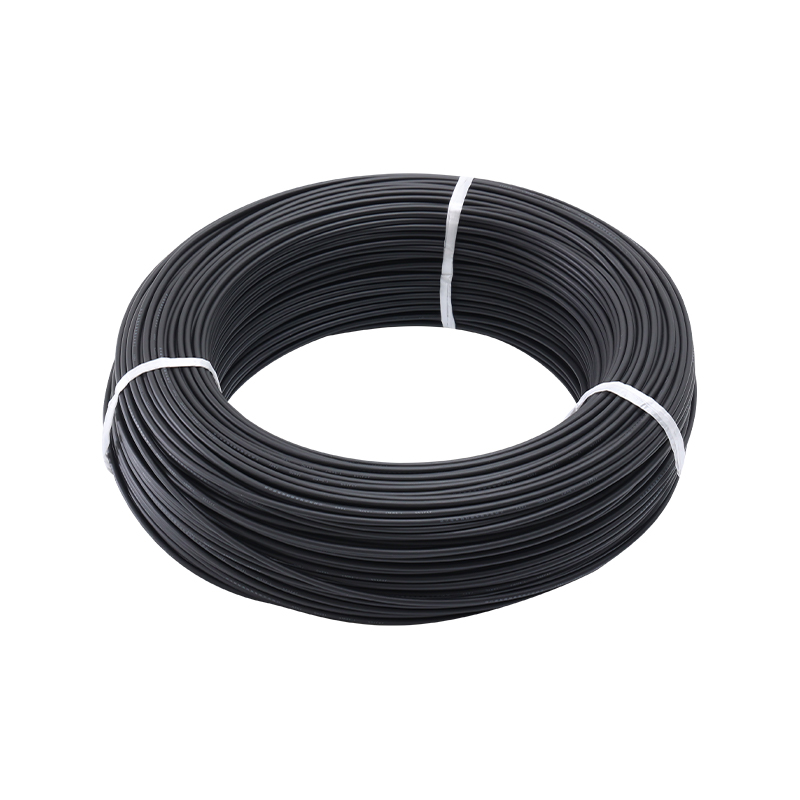
Teflon cable refers to any electrical wire or cable insulated or jacketed with polytetrafluoroethylene (PTFE) — a synthetic fluoropolymer commercially known by DuPont's trademark name Teflon. The insulation surrounds a copper or silver-plated copper conductor and serves as the primary barrier between the conductor and its environment. Unlike standard PVC or rubber-insulated cables, Teflon-insulated cables are engineered for extreme conditions: high operating temperatures, aggressive chemical environments, high-frequency electrical applications, and spaces where flame resistance and low smoke emission are critical safety requirements.
PTFE was discovered accidentally in 1938 by Roy Plunkett at DuPont and entered industrial wire and cable manufacturing in the late 1940s and 1950s, initially in aerospace and military electronics. Today it is specified across aerospace, defense, semiconductor manufacturing, medical devices, industrial process control, and high-performance computing — anywhere that conventional insulation materials fall short of application demands.
Key Physical and Electrical Properties of PTFE Insulation
The performance of Teflon cable derives entirely from the unique molecular structure of PTFE — a carbon backbone completely shielded by fluorine atoms. This carbon-fluorine bond is one of the strongest in organic chemistry, giving PTFE an exceptional combination of thermal, chemical, and electrical properties that no other single polymer matches across the same range.
Thermal Performance
PTFE insulation maintains its mechanical integrity and dielectric properties across an extremely wide continuous operating temperature range of -65°C to +260°C (-85°F to +500°F). At the high end, this far exceeds PVC (typically rated to +105°C), cross-linked polyethylene (XLPE, rated to +90°C or +125°C), and silicone rubber (rated to +180–200°C in most grades). PTFE does not melt, drip, or flow at these temperatures — it remains dimensionally stable. At the low end, it stays flexible in deep cryogenic environments where many other polymers become brittle and crack. This makes Teflon cable the insulation of choice for jet engine wiring harnesses, furnace monitoring sensors, and equipment deployed in arctic or space environments.
Chemical and Solvent Resistance
PTFE is virtually inert to all known chemicals except molten alkali metals and certain fluorinating agents. It resists concentrated sulfuric acid, hydrofluoric acid, hydraulic fluids, fuels, solvents, oils, and cleaning agents without swelling, softening, or degrading. This property is critical in chemical processing plants where cables are routed through environments containing aggressive vapors or occasional liquid splash, and in laboratory and medical applications where cables must be wiped down with disinfectants or sterilized with chemical agents without damaging the insulation.
Dielectric and High-Frequency Properties
PTFE has a dielectric constant of approximately 2.1 across a wide frequency range — one of the lowest of any solid insulating material. A low dielectric constant means less signal energy is stored in the insulation, resulting in lower signal propagation delay and reduced capacitance per unit length. Combined with a dissipation factor (loss tangent) of less than 0.0002, PTFE insulation produces extremely low signal attenuation at high frequencies. These properties make Teflon cable the standard choice for coaxial cables used in RF, microwave, and millimeter-wave applications, antenna feed lines, and high-speed data interconnects where signal integrity must be preserved over long runs.
Flame Resistance and Low Smoke Emission
PTFE does not support combustion and will not sustain a flame when the ignition source is removed. Its limiting oxygen index (LOI) exceeds 95% — meaning it requires an atmosphere of more than 95% oxygen to continue burning, far above the 21% oxygen content of air. When exposed to flame, PTFE chars rather than melts or drips flaming particles. Smoke emission is minimal compared to PVC, which releases dense black smoke and toxic hydrogen chloride gas when burned. These characteristics make PTFE-insulated cables preferred in aircraft cabins, submarines, mass transit vehicles, and buildings where fire safety codes mandate low-smoke, low-toxicity cable materials.
Types of Teflon Cable by Construction
Not all Teflon cables use the same PTFE formulation or construction method. The choice of construction directly affects the cable's flexibility, wall thickness, temperature rating, and cost.
Extruded PTFE Cable
Standard PTFE cannot be processed by conventional melt extrusion because it does not flow as a liquid — it transitions directly from solid to a paste-like state. Extruded PTFE wire is produced by a ram extrusion (paste extrusion) process in which PTFE powder mixed with a lubricant is forced through a die around the conductor, then sintered at high temperature to fuse the polymer particles into a solid insulation wall. The result is a smooth, dense insulation with excellent dielectric properties and a wall thickness that can be precisely controlled. Extruded PTFE wire typically carries a UL 44 or MIL-W-16878 specification and is used in hookup wire, panel wiring, and instrument leads.
Tape-Wrapped PTFE Cable
Tape-wrapped construction winds thin PTFE tape helically around the conductor in multiple layers, which are then sintered to bond the layers together. This process allows very thin insulation walls on fine conductors and is used extensively in aerospace wiring harnesses and miniature coaxial cables. Tape-wrapped PTFE can also be left un-sintered (expanded PTFE or ePTFE), producing a microporous structure with an even lower dielectric constant (as low as 1.45) due to the air trapped in the pores. Expanded PTFE insulation is widely used in high-performance coaxial cables for microwave and RF applications.
FEP and PFA Cable (Related Fluoropolymers)
Fluorinated ethylene propylene (FEP) and perfluoroalkoxy (PFA) are melt-processable fluoropolymers that share most of PTFE's chemical and dielectric properties but can be extruded using conventional equipment at higher throughput. FEP is rated to +200°C and PFA to +250°C — slightly below PTFE's +260°C ceiling. Both are commonly referred to as "Teflon" cables in the market because FEP and PFA are also DuPont/Chemours Teflon-branded materials. FEP cables are particularly common in plenum-rated data communications wiring (CMP-rated Category 5e/6 cables) where building codes require low-smoke, flame-retardant insulation in air-handling spaces above ceilings and below raised floors.
Teflon Cable Properties at a Glance
The table below compares PTFE cable insulation against common alternatives across the most critical specification parameters:
| Property | PTFE (Teflon) | PVC | Silicone | XLPE |
| Max. Temp. Rating | +260°C | +105°C | +180–200°C | +90–125°C |
| Min. Temp. Rating | -65°C | -20°C | -60°C | -40°C |
| Dielectric Constant | ~2.1 | 3.0–4.5 | 2.7–3.3 | 2.2–2.4 |
| Chemical Resistance | Excellent | Moderate | Good | Good |
| Flame Resistance | Self-extinguishing | Burns / toxic smoke | Self-extinguishing | Burns slowly |
| Relative Cost | High | Low | Medium–High | Medium |
Primary Industries and Applications for Teflon Cable
The combination of thermal stability, chemical inertness, and superior electrical properties positions Teflon cable in demanding applications where standard cables would fail prematurely or compromise safety. The following industries rely on it most heavily:
- Aerospace and Defense: Aircraft wiring harnesses are routed through engine bays, wheel wells, and avionics compartments that experience extreme temperature cycling, fuel and hydraulic fluid exposure, and strict weight budgets. PTFE's high temperature rating and low specific gravity (allowing thinner insulation walls for equivalent voltage ratings) make it the dominant specification. Military standards MIL-W-22759 and MIL-DTL-27500 govern most aerospace Teflon wire used by the U.S. military and its suppliers.
- Semiconductor and Electronics Manufacturing: Cleanroom environments, plasma etching equipment, and chemical vapor deposition systems expose cables to corrosive process gases such as chlorine, fluorine compounds, and strong acids. PTFE-jacketed cables withstand these environments without outgassing contaminants that could compromise sensitive wafer processes or yield.
- Medical Equipment: Surgical robots, MRI machines, and diagnostic imaging equipment require cables that can be steam-sterilized, wiped with disinfectants, and routed within confined equipment housings generating substantial heat. PTFE's biocompatibility, sterilization resistance, and thin wall dimensions support these requirements.
- Industrial Process Control: Thermocouple extension wire, resistance temperature detector (RTD) leads, and transmitter cables routed inside furnaces, kilns, and chemical reactors use PTFE insulation to survive the continuous heat and chemical exposure that would rapidly degrade other insulation materials.
- RF and Microwave Communications: Coaxial cables for antenna systems, laboratory test equipment, radar, and satellite communications use PTFE or expanded PTFE dielectric to minimize signal loss at frequencies from hundreds of MHz into the tens of GHz range. Products such as RG-316, RG-142, and LMR-series cables with PTFE dielectric are standard in these applications.
- Building Plenum Wiring: FEP-insulated Cat6 and fiber optic cables rated CMP (Communications Multipurpose Plenum) are required by the National Electrical Code (NEC) in air-handling spaces of commercial buildings, where burning cable insulation could spread toxic fumes through HVAC ductwork into occupied areas.
Handling and Installation Considerations
Despite its exceptional performance, PTFE insulation has handling characteristics that installers and engineers must account for when specifying and routing Teflon cable in the field.
PTFE is a relatively soft material with low resistance to cut-through and abrasion compared to XLPE or nylon-jacketed cables. In applications where cables are routed through metal conduit, past sharp edges, or subject to repeated mechanical movement, PTFE-insulated cables should be protected with abrasion-resistant outer jackets, conduit, or cable sleeves. Single-layer PTFE hookup wire used in panel wiring should be secured at close intervals and kept away from sharp edges.
PTFE is also dimensionally unstable at elevated temperatures under tensile load — it can creep slowly under sustained mechanical stress at temperatures above 100°C. For high-temperature vertical runs carrying their own weight over long distances, cable supports and strain relief fittings should be specified at more frequent intervals than would be required for stiffer insulation materials.
Stripping PTFE insulation requires sharp, purpose-made stripping tools. The material does not nick cleanly with standard wire strippers calibrated for PVC, and forcing a poorly adjusted stripper tool will nick the conductor — a critical defect in fine-gauge aerospace wire where conductor nicks reduce tensile strength and can cause fatigue failures in vibrating structures.
Selecting the Right Teflon Cable for Your Application
With several PTFE variants and construction types available, choosing the right Teflon cable requires matching the specific product to the application's demands rather than defaulting to the most common specification. The following checklist guides the selection process:
- Temperature range: Confirm both the maximum continuous operating temperature and the minimum installation/storage temperature. Standard PTFE covers -65°C to +260°C; FEP covers -65°C to +200°C. For applications that only reach +180°C, FEP may be more cost-effective and easier to terminate.
- Frequency and signal integrity: For RF and microwave applications, specify expanded PTFE (ePTFE) dielectric coaxial cable for the lowest possible dielectric constant and attenuation. For DC and low-frequency signal wiring, standard extruded PTFE is fully adequate and less expensive.
- Chemical exposure: Verify that the jacket and insulation material are compatible with specific chemicals present in the environment. While PTFE handles nearly all chemicals, FEP and PFA have slightly different resistance profiles — always check the chemical resistance chart from the cable manufacturer for unusual media.
- Regulatory and approvals requirements: Aerospace applications typically require MIL-spec or AS22759-series approvals. Commercial building data cables require NEC plenum (CMP) or riser (CMR) ratings. Medical cables may require ISO 10993 biocompatibility documentation. Confirm required approvals before ordering.
- Mechanical environment: If the cable will experience continuous flexing (robotic arms, drag chain installations), specify a stranded conductor construction with a flexible PTFE or FEP jacket rated for dynamic flex applications rather than standard hookup wire intended for static routing.
Teflon cable commands a price premium over standard insulation materials, but in the applications for which it is designed, this cost is justified by extended service life, reduced maintenance intervals, and the avoidance of insulation failures that could cause costly equipment damage, production downtime, or safety incidents. Specifying the right Teflon cable from the outset is invariably less expensive than retrofitting failed standard cable in a difficult installation environment.