English
 عربى
عربى Español
Content
- 1 What Makes a Lead Wire Truly Suitable for High Voltage Machines?
- 2 Key Electrical Parameters That Define Lead Wire Performance
- 3 Insulation Materials Used in High Voltage Machine Lead Wire
- 4 Conductor Construction and Its Effect on Lead Wire Reliability
- 5 Applicable Standards and Certifications to Verify Before Purchase
- 6 Common Failure Modes and How Proper Specification Prevents Them
- 7 Practical Guidelines for Routing and Terminating High Voltage Lead Wire
What Makes a Lead Wire Truly Suitable for High Voltage Machines?
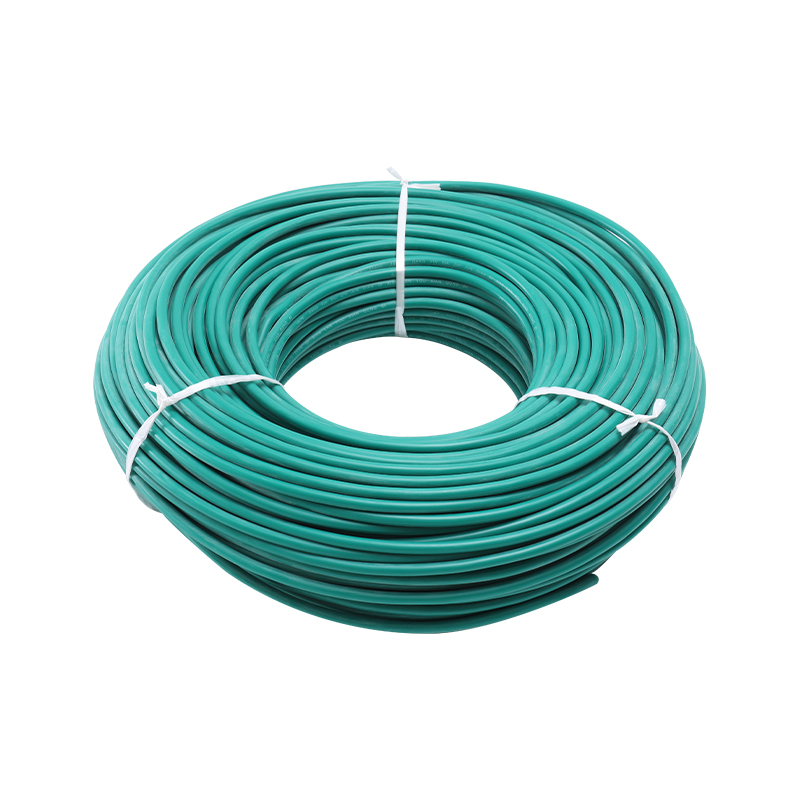
A high voltage machine lead wire is the conductor that connects the internal windings of motors, generators, and transformers to external terminals or control systems. It carries current at voltages that standard hookup wire cannot safely handle — typically ranging from 600 V up to 35 kV or beyond depending on the application. While the wire may appear to be a minor component, its insulation integrity, thermal stability, and dielectric strength directly determine whether a machine operates reliably over its service life or fails prematurely due to insulation breakdown.
The demands placed on lead wire in high voltage machines are severe. It must withstand sustained electrical stress, resist heat generated by the winding itself, tolerate mechanical flexing during installation and operation, and in many cases hold up against oils, coolants, and industrial chemicals. Selecting the wrong lead wire — even one rated for a moderately lower voltage — introduces dielectric risk that compounds over time as insulation ages under electrical stress.
Key Electrical Parameters That Define Lead Wire Performance
Before specifying any lead wire for a high voltage machine, several electrical parameters must be confirmed. These values are not interchangeable between product types and must be matched precisely to the application's operating conditions.
- Voltage rating: The maximum continuous voltage the insulation can safely carry. Lead wires are rated at levels such as 600 V, 2 kV, 5 kV, 8 kV, 15 kV, and 25 kV. Operating above this rating accelerates insulation degradation through partial discharge and eventual breakdown.
- Dielectric strength: Measured in kV/mm, this quantifies how much electrical stress the insulation material can withstand per unit thickness. XLPE, EPR, and silicone rubber each offer different dielectric strength values and must be selected based on insulation wall thickness and operating voltage.
- Capacitance per unit length: High capacitance in long lead wire runs can affect signal integrity in variable frequency drive (VFD) applications and cause excess leakage current — a critical consideration for motors driven by inverters.
- Partial discharge inception voltage (PDIV): In medium and high voltage applications, this rating indicates the voltage at which partial discharges begin to occur within the insulation. Lead wire used in motors fed by PWM inverters must maintain a high PDIV to resist the repetitive voltage spikes generated by switching transients.
Insulation Materials Used in High Voltage Machine Lead Wire
The insulation system is the most critical element of any high voltage lead wire. Different materials are used depending on the voltage class, thermal requirement, and environmental exposure of the application. The table below compares the most commonly specified insulation types.
| Insulation Material | Max Temp Rating | Voltage Range | Key Advantage | Limitation |
|---|---|---|---|---|
| XLPE | 90°C | 600 V – 35 kV | Low dielectric loss, moisture resistance | Stiffer; limited flexibility |
| EPR | 90°C – 105°C | 600 V – 35 kV | Excellent flexibility, ozone resistance | Higher dielectric loss than XLPE |
| Silicone Rubber | 180°C – 200°C | 600 V – 5 kV | Extreme heat and cold resistance | Tears easily under mechanical stress |
| EPDM | 90°C | 600 V – 15 kV | UV and weathering resistance | Not preferred for oil-immersed environments |
| PTFE | 260°C | 600 V – 3 kV | Chemical inertness, ultra-thin wall | High cost; limited voltage range |
Why EPR Dominates Motor Lead Wire Applications
EPR-insulated lead wire has become the industry standard for medium voltage motors and generators, particularly in the 2 kV to 15 kV range. Its flexibility makes routing through tight motor frames practical without risking insulation cracking during bending, and its resistance to ozone and moisture ensures long service life even in humid or outdoor installations. Many EPR motor lead wires are further jacketed with CPE (chlorinated polyethylene) or CSP (chlorosulfonated polyethylene) to add mechanical and chemical protection — especially critical in oil and gas, mining, and water treatment environments.
Silicone Lead Wire for High-Temperature Machine Applications
In motors operating in high-temperature environments — such as furnace drives, traction motors, or aerospace-grade machines — silicone rubber insulation is specified due to its ability to function continuously at 180°C and above. Silicone also retains flexibility at very low temperatures, making it suitable for cryogenic or cold-climate installations. Its principal weakness is physical fragility: silicone tears under sharp mechanical stress and should always be protected by a braid or outer jacket in applications involving abrasion or tight conduit routing.
Conductor Construction and Its Effect on Lead Wire Reliability
The conductor inside a high voltage machine lead wire is almost universally stranded copper, though aluminum is occasionally specified in large generator lead connections where weight reduction matters. Stranding increases flexibility and fatigue resistance compared to solid conductors, which is essential when lead wire must be bent repeatedly during motor assembly or field maintenance.
Conductor construction is classified by the number and diameter of individual strands. Fine stranded conductors (Class 5 or Class 6 per IEC 60228) offer greater flexibility for tight routing inside cramped motor frames, while coarser stranding (Class 1 or Class 2) is used where mechanical rigidity is acceptable and cost efficiency matters. For applications involving continuous flexing — such as wound rotor motor leads or slip ring connections — ultra-fine stranding with tinned copper provides maximum fatigue life by distributing bending stress across a far larger number of wire elements.
Tinning the copper strands also improves solderability at termination points and provides a protective barrier against oxidation, which is particularly valuable in humid or chemically aggressive environments where bare copper would develop surface resistance over time, leading to hot spots and connection failures.
Applicable Standards and Certifications to Verify Before Purchase
Compliance with recognized standards is not optional for high voltage machine lead wire used in regulated industries. Standards define the test methods, rated performance thresholds, and marking requirements that allow engineers to specify products with confidence and traceability. The most relevant standards include:
- UL 44: The primary North American standard for thermoset-insulated wires and cables, covering XHHW-2 and RHH/RHW-2 designations used in machine wiring up to 600 V and 2 kV respectively.
- UL 1072 / UL 1533: Governs medium voltage cables rated 2 kV to 35 kV used in power distribution and machine lead applications across North American installations.
- IEC 60502: The international standard for power cables with extruded insulation from 1 kV to 30 kV, widely referenced in European and global machine specifications.
- NEMA MW 1000 / IEC 60317: Covers magnet wire and winding wire, relevant when lead wire exits directly from winding turns in transformer and motor coil assemblies.
- IEEE 1553 / IEEE 1678: IEEE standards addressing the qualification and condition assessment of insulation in rotating machine stator windings, offering guidance for lead wire used in motors and generators.
- ATEX / IECEx / NEC Article 500: For explosion-proof or hazardous location machines, these frameworks impose additional constraints on lead wire surface temperature ratings and spark-resistance characteristics.
Common Failure Modes and How Proper Specification Prevents Them
Lead wire failures in high voltage machines rarely occur suddenly. They follow predictable degradation paths that proper initial specification can significantly delay or entirely prevent. Understanding these failure modes guides both specification decisions and maintenance strategies.
Thermal Degradation
Operating a lead wire consistently at or near its maximum temperature rating accelerates polymer chain breakdown in the insulation. For every 10°C rise above the rated temperature, the Arrhenius aging model predicts that insulation life is approximately halved. In machines with poor ventilation or high duty cycles, specifying insulation with a thermal class 20–30°C above the expected operating temperature provides a practical safety margin without a significant cost premium.
Partial Discharge Erosion
Partial discharge (PD) is a localized electrical breakdown within voids or at interfaces inside the insulation system. In medium voltage motors driven by variable frequency drives, the fast-rising voltage pulses (with rise times under 0.1 microseconds) significantly stress lead wire insulation beyond what traditional 50/60 Hz power would produce. Lead wire selected specifically for inverter-duty service carries a higher PDIV and uses insulation formulations that resist the erosive effect of partial discharges over thousands of operating hours.
Moisture Ingress and Delamination
When lead wire is installed in outdoor switchgear, water-cooled machines, or underground motor installations, moisture penetration into the insulation system lowers the dielectric strength and promotes tracking failures along the wire surface. Specifying lead wire with a water-resistant outer jacket — such as CPE or CSPE — and ensuring the termination end seals are properly installed eliminates the primary ingress path. In submersible pump motors operating at medium voltage, triple-layer insulation systems with inner EPR, copper tape shield, and outer HDPE jacket are standard precisely because water exposure is continuous and unavoidable.
Mechanical Abrasion at Exit Points
Where lead wire exits the motor frame through grommets, conduit entries, or cable glands, the wire is subjected to vibration-induced abrasion. Over months or years, this removes the outer jacket and eventually erodes into the insulation wall. Addressing this during specification means selecting lead wire with a robust outer jacket hardness, using properly sized grommets that do not pinch the wire, and applying anti-vibration clamps within 150 mm of the exit point to reduce dynamic movement.
Practical Guidelines for Routing and Terminating High Voltage Lead Wire
Even the highest-quality lead wire will underperform if routed or terminated incorrectly. The following practical guidelines apply to most motor and generator lead wire installations and reduce field failure risk substantially.
- Respect minimum bend radius: Bending lead wire below its rated minimum radius compresses the insulation wall on one side and stretches it on the other, creating stress concentration points. For EPR-insulated medium voltage wire, the minimum bend radius is typically 12× the overall cable diameter during installation and 8× in fixed installations.
- Use compression lugs sized for stranded conductors: Crimp or compression terminations must match the conductor's AWG size and stranding class. Using a lug designed for solid or coarser-stranded wire on a fine-stranded lead wire conductor creates voids in the crimp barrel that increase contact resistance and become sites for oxidation and heating.
- Apply stress relief tubing at termination points: Medium and high voltage lead wires develop electric field concentration at the point where the insulation ends and the terminal begins. Cold-shrink or heat-shrink stress relief components redistribute this field gradient, preventing surface tracking and corona discharge at the terminal interface.
- Secure wire to prevent vibration: Use cable ties, clamps, or saddles rated for the temperature and chemical environment of the machine. Spacing supports no more than 300 mm apart in high-vibration applications keeps the wire from developing fatigue cracks in the conductor strands at support edges.
- Perform hipot testing after installation: A DC hipot test at a voltage level appropriate to the wire's rating (typically 80% of the factory test voltage) confirms that no insulation damage occurred during installation before the machine is energized. Skipping this test means any installation damage only reveals itself as an in-service failure, often at the worst possible time.
High voltage machine lead wire is ultimately a precision component — not a commodity. The difference between a wire that lasts the full expected 20-year machine service life and one that fails within three years almost always traces back to a specification gap, an installation shortcut, or a mismatch between the wire's rated capability and the actual operating environment. Treating lead wire selection with the same rigor applied to the machine's core insulation system is the most cost-effective investment a maintenance or engineering team can make.