English
 عربى
عربى Español
Content
- 1 What Fiberglass Wire Sleeving Actually Is
- 2 The Properties That Decide Whether a Sleeve Works
- 3 Where Fiberglass Wire Sleeving Is Used
- 4 How to Choose the Right Sleeve
- 5 Installation and Termination Practices
- 6 Comparing Sleeving Options
- 7 Quality Standards and Supplier Questions
- 8 Working With Us on Sleeving and Lead Assemblies
Fiberglass wire sleeving rarely gets the attention that conductors and connectors receive, yet it handles one of the toughest jobs inside electrical equipment: keeping heat away from insulation, stopping a lead wire from rubbing through a metal edge, and adding dielectric strength where there is almost no space left. After more than twenty years of building high-temperature wires and harness assemblies, we have seen how often the sleeve, rather than the conductor, decides whether an appliance passes its end-of-line hipot test and whether it still works five years later.
What Fiberglass Wire Sleeving Actually Is
A fiberglass sleeve is a flexible tube made from fine glass filaments spun into yarns and braided into a round covering. The braid may be left uncoated or coated with silicone, acrylic or a silicone rubber dispersion. Unlike a solid extruded tube, a braided structure follows tight wire routing without kinking while still tolerating temperatures that would destroy PVC or ordinary rubber.
E-glass does not burn and melts only above 1000 degrees Celsius, which is why an uncoated braid can shrug off a brief touch from a soldering iron. A coated version trades a little of that extreme headroom for better abrasion resistance, cut-through resistance and dielectric strength.
Braided versus coated construction
Uncoated sleeving is soft and open at the weave. It bundles wires and shields them from mechanical wear, but fraying, dust ingress and moisture absorption can become problems in a finished assembly. Coating fills the weave, so the tube becomes smoother, slightly stiffer and better able to hold a shape around a bend.
Silicone-coated fiberglass is the workhorse in appliance and motor work: the coating stays flexible across a wide temperature range and adds useful dielectric strength. Acrylic coating costs less and performs well to about 155 degrees Celsius, but it does not survive the same heat cycling.
The Properties That Decide Whether a Sleeve Works
Five numbers usually determine whether a sleeve lasts in service or fails early.
- Continuous temperature rating, which matters far more than a short-term peak figure.
- Dielectric strength, usually given in kilovolts per millimeter of wall thickness.
- Inside diameter and wall thickness, which must fit over the wire or splice while still leaving the insulation margin the design assumed.
- Abrasion and cut-through resistance, where coated and silicone-impregnated sleeves beat bare braid by a wide margin.
- Chemical and oil resistance, since transformer oil, refrigerant, lubricants and cleaning agents attack some coatings and leave others untouched.
Two practical factors also matter: flexibility at low temperature, and how the sleeve behaves when it is cut. A braid that frays at the cut end sheds glass fibers into a harness, which is not acceptable in appliances that handle food or drinking water.
Where Fiberglass Wire Sleeving Is Used
Motor and generator lead wire protection
Motor winding leads leave the stator and run to a terminal block or connector, often passing close to hot windings. A braided or silicone-coated sleeve slides over the lead and provides a thermal barrier plus protection against vibration. On high-voltage leads rated at 3000, 6000 or even 10000 volts, the sleeve also contributes dielectric margin where the lead crosses a grounded frame.
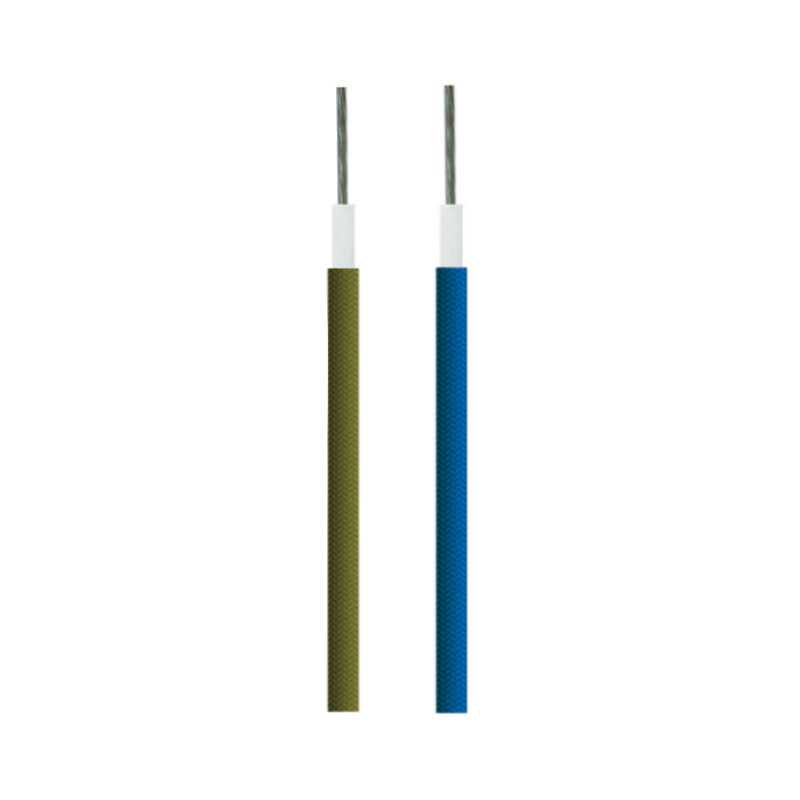 Braided Silicone Rubber Wire for High-Temperature ApplicationsCompare braided silicone rubber wire series and models with glass fiber or silicone insulation for motors, heaters, appliances, and other high-temperature wiring.View Product →
Home appliance and kitchen appliance harnesses
Inside an air fryer, an oven, a pressure cooker or a steam-and-bake appliance, internal wiring runs beside heating elements that glow red. The harness must be shielded from radiant heat and from chafing against sheet metal at the same time. A silicone-coated glass fiber sleeve is a common answer, usually paired with heat-resistant wire so the finished lead assembly meets its temperature class.
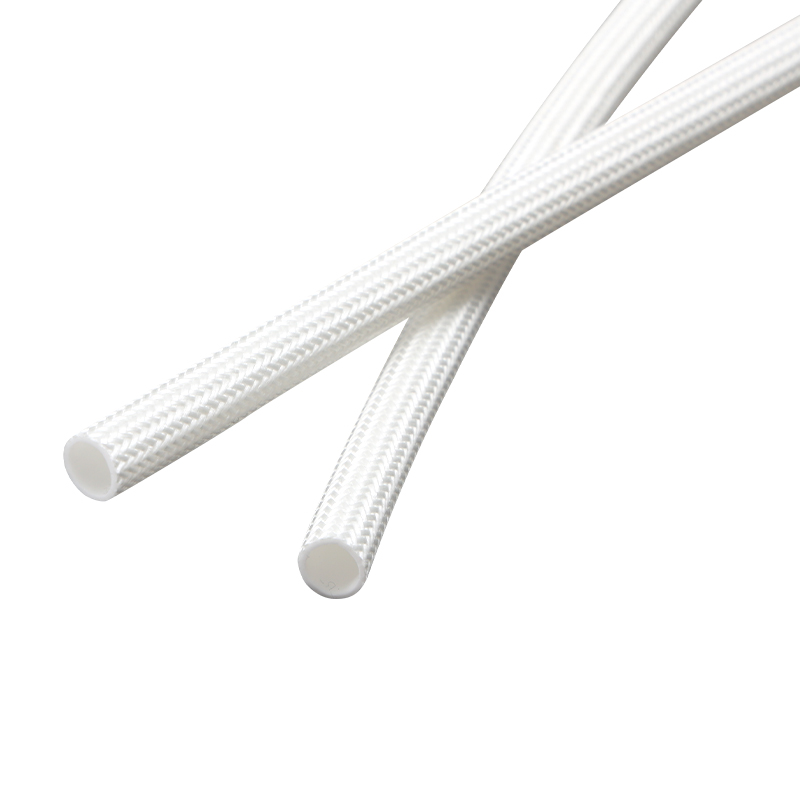 Silicone Coated Fiberglass Braided Sleeve for High-Temperature Cable ProtectionUse this sleeve over leads near heating elements or motors to add thermal, abrasion, and chemical protection while preserving flexibility in appliances and industrial equipment.View Product →
The same reasoning applies in bathroom heaters, smart toilet lids and vacuum cleaners, where moisture, movement and motor heat all shorten the life of unprotected insulation.
Transformers, heating elements and industrial equipment
In transformer assemblies, glass fiber sleeving protects lead wires, tap connections and bushing leads, and it has to stay compatible with transformer oil. In industrial heating equipment it shields the power feed to the element and nearby control wiring. Lighting, battery packs and electric vehicle high-voltage runs follow the same rules: keep the conductor cool, keep the insulation intact, keep the assembly compact.
How to Choose the Right Sleeve
Start with the service environment rather than the catalog page, and work through these points in order.
- Confirm the continuous operating temperature at the hottest point the sleeve will touch.
- Check whether the sleeve will see oil, fuel, refrigerant, cleaning chemicals or ultraviolet light.
- Measure the bundle or splice diameter, then pick an inside diameter that slides on without stretching the braid.
- Decide whether the sleeve must stay in place. If it must, choose a coated grade or plan a tie or adhesive.
- Confirm the approvals the end product needs, such as UL, VDE, CQC, and RoHS or REACH compliance for the materials used.
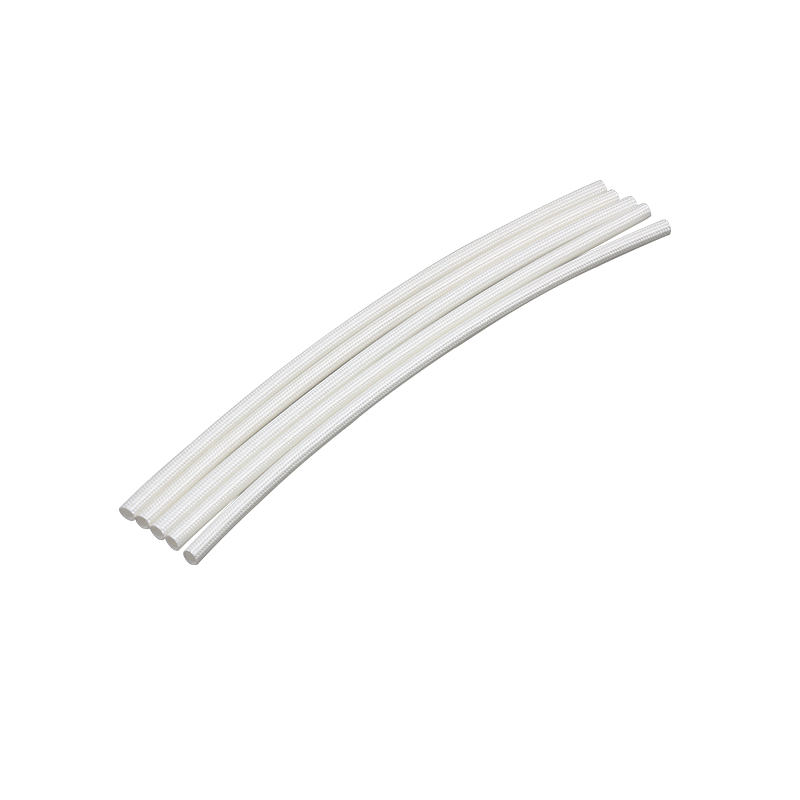 Glass Fiber Braided Silicone Rubber Sleeve for Pressure and HeatReview this UL758-certified 600V sleeve for high-temperature joints needing thermal insulation, chemical resistance, and added mechanical strength under repeated flexing.View Product →
Where a joint faces pressure as well as heat, a glass fiber braid over a silicone rubber sleeve adds mechanical strength on top of thermal protection, which is why it appears on leads that must also survive repeated flexing.
Installation and Termination Practices
Most sleeving failures we investigate begin at installation rather than in the material, and a few habits prevent almost all of them. Cut with a sharp blade or a hot knife so the braid does not unravel. Deburr any metal edge the sleeve will cross, and add a grommet where the wire passes through a panel. Leave the sleeve slightly longer than the exposed hot section so it cannot creep away from the joint, but not so long that it traps heat inside a connector. Fix the ends with a tie, a shrink band or a silicone adhesive so vibration cannot walk the sleeve out of position, and avoid crimping over the sleeve unless the terminal is specified for it.
Comparing Sleeving Options
Different sleeves solve different problems. The table below summarizes the options we see most often in appliance, motor and automotive work.
| Sleeve type | Typical continuous temperature | Abrasion resistance | Flexibility | Common use |
|---|---|---|---|---|
| Braided fiberglass, uncoated | Up to 550 degrees Celsius | Moderate | High | Wire bundling, soldering protection, very hot zones |
| Silicone-coated fiberglass | -60 to 200 degrees Celsius | Good | High | Appliance harnesses, motor leads, transformer leads |
| Acrylic-coated fiberglass | Up to 155 degrees Celsius | Good | Moderate | General electrical insulation, cost-sensitive builds |
| Silicone rubber tubing | -60 to 200 degrees Celsius | Moderate | High | Sealing, vibration damping, fluid paths |
| FEP sleeving | -70 to 250 degrees Celsius | Good | Moderate | Chemical resistance, thin-wall high-temperature insulation |
| PVC heat shrink tubing | 105 to 125 degrees Celsius | Good | Rigid after shrinking | Strain relief, marking, low-temperature bundling |
The best performer on a temperature chart is not automatically the best choice. An uncoated braid wins on heat, yet it frays easily and offers little dielectric margin; a coated sleeve wins on electrical performance but has a lower ceiling. Match the sleeve to the real bottleneck in the assembly.
Quality Standards and Supplier Questions
For appliance and motor customers, requirements arrive from two directions. The sleeve itself may need recognition under a component program such as UL, or certification to VDE, CQC or another national scheme. The finished harness may also have to pass the customer's own temperature and dielectric tests, plus RoHS and REACH requirements for the materials it contains.
When you evaluate a supplier, ask for the continuous temperature rating rather than the peak, request the wall thickness tolerance, and confirm how the sleeve is cut and packed so it arrives without frayed ends. If the part goes into an automotive or high-voltage application, ask about the quality system behind the certificate. A manufacturer that also builds insulated wire tends to understand the whole lead assembly, including how the sleeve interacts with the conductor insulation, the terminal and the strain relief. For more background on that side of the design, see how to choose high-temperature wire.
Working With Us on Sleeving and Lead Assemblies
We build both halves of this problem: the insulated wire and the protective sleeve that goes over it, together with the harness that joins them. That combination is useful when a redesign moves a connection closer to a heater, when a certification test fails on dielectric margin, or when a lead keeps chafing no matter how the routing is drawn. Bring us the temperature profile, the routing and the approvals the end product needs, and we can suggest a sleeve and wire pairing that fits the space you have. You are welcome to look through our wire and cable production to see the materials we work with every day.