English
 عربى
عربى Español
Content
A flexible control cable is not simply a wire that bends. It is a cable engineered so that repeated bending, twisting and vibration do not shorten its service life or disturb the control signal and power it carries. That distinction matters most where a cable is routed around a hinge, pulled through a handle, clamped close to a motor terminal, or buried inside an appliance that heats up and cools down thousands of times a year.
At Zhijun Cables we have produced insulated wire, multicore cable and appliance wiring harnesses in Jiangyin, Jiangsu for more than two decades, so the question we hear most often is refreshingly practical: how much flexibility does this application really need, and what has to change in the construction to achieve it?
What Makes a Control Cable Genuinely Flexible
Flexibility is the sum of many small design decisions, and it is almost always cheaper to build it in at the drawing stage than to repair a field failure later. Four factors do most of the work.
Conductor stranding
A stranded conductor with many fine strands bends with far less internal stress than a coarse one of the same cross-sectional area. Control cables are normally built from bunched or rope-laid tinned copper, which also resists oxidation and solders cleanly at terminals. As a rough rule, if a cable must survive continuous flexing, look for a strand count well above what a fixed wiring cable of the same size would use. Extra-soft silicone types such as UL3135 and UL3139 illustrate the point nicely: the copper is fine enough that the finished wire feels closer to a cord than a cable.
Insulation compound and wall thickness
Silicone rubber keeps its elasticity across roughly -60 °C to 200 °C, so a silicone-insulated control cable stays soft in a cold room and does not harden inside an oven. PVC is the economical choice across the common 70 °C to 105 °C range, although it stiffens noticeably in cold weather. Irradiated crosslinked compounds such as XLPE and XLPO offer a thin, tough wall between 105 °C and 150 °C, while PTFE and FEP cover the upper end of the scale at 200 °C and beyond. Wall thickness is a trade-off: a thinner wall flexes more easily, but it also reduces mechanical and dielectric margin.
Lay length, fillers and jacket
In multicore constructions, the way the cores are twisted together matters as much as the materials. A short lay length combined with soft fillers and a flexible jacket lets the cores slide against one another instead of fighting each other as the cable bends. Braided glass-fibre or tinned copper screens add abrasion and interference protection, but they also add stiffness, so they should be specified only where the environment genuinely demands them.
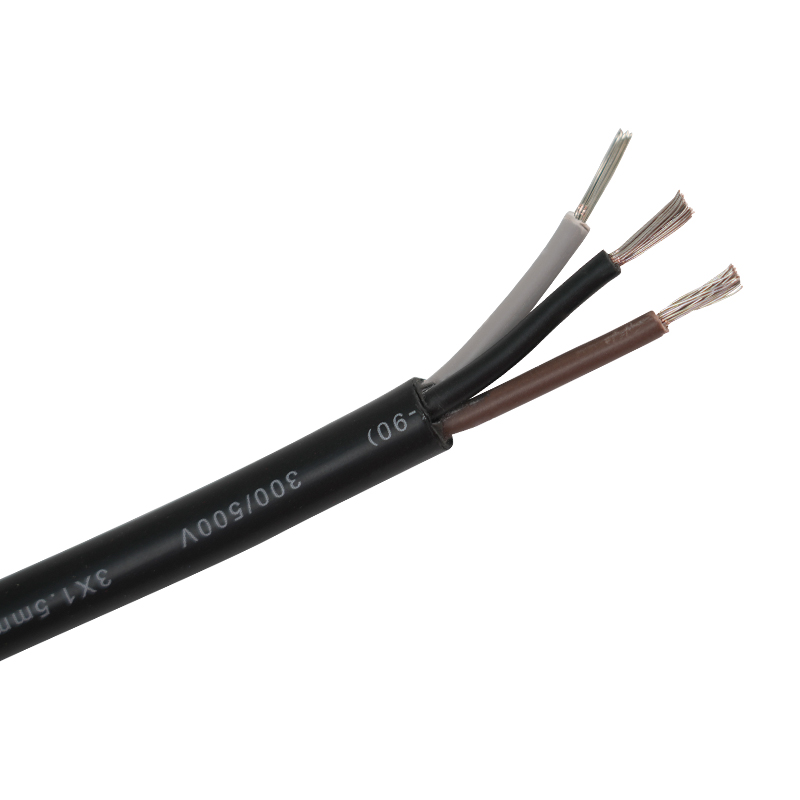 YGZ Heat-Resistant Silicone Rubber Multi-Core Sheathed CableSilicone sheathed cable is a multi-core cable that uses silicone rubber as the sheath material. It has excellent high temperature resistance, low temperature resistanc...View Product →
Multicore sheathed designs such as our YGZ heat-resistant silicone rubber cable are built around exactly this balance, keeping the cores free to move inside a jacket that still tolerates heat and flexing over a long service life.
Insulation Systems Compared for Flexible Control Cable
The table below summarises the insulation systems our customers most often weigh against each other when specifying a flexible control cable. Temperature ranges refer to the conductor rating of the finished wire, so the ambient conditions of the application should always be checked against them.
| Insulation system | Typical temperature range | Flexibility | Typical control cable use |
|---|---|---|---|
| PVC | 70 °C to 105 °C | Good, lowest cost | Panel wiring, general appliance and electronic internal connections |
| Silicone rubber | -60 °C to 200 °C | Excellent, stays soft when cold | Heating appliances, motor leads, battery and high-temperature connections |
| Glass-fibre braided silicone | 200 °C and above | Good, with extra abrasion protection | Ovens, fryers and other high-temperature control leads |
| Irradiated crosslinked XLPE or XLPO | 105 °C to 150 °C | Good, thin and tough wall | Motor leads, equipment connection wire, thin routing spaces |
| PTFE and FEP | 200 °C to 260 °C | Moderate, very thin walls | High-temperature electronics and compact equipment interiors |
Where Flexible Control Cables Do the Real Work
Kitchen and household appliances
Heating appliances are the classic torture test. An air fryer, oven, pressure cooker or steam-bake machine combines a hot zone, a control board and a moving or vibrating structure inside one small housing. A cable that turns brittle after a few hundred thermal cycles will crack at the first strain relief. This is why appliance control harnesses are usually built from silicone or braided silicone wire with high-temperature sleeving and a thermal fuse where required.
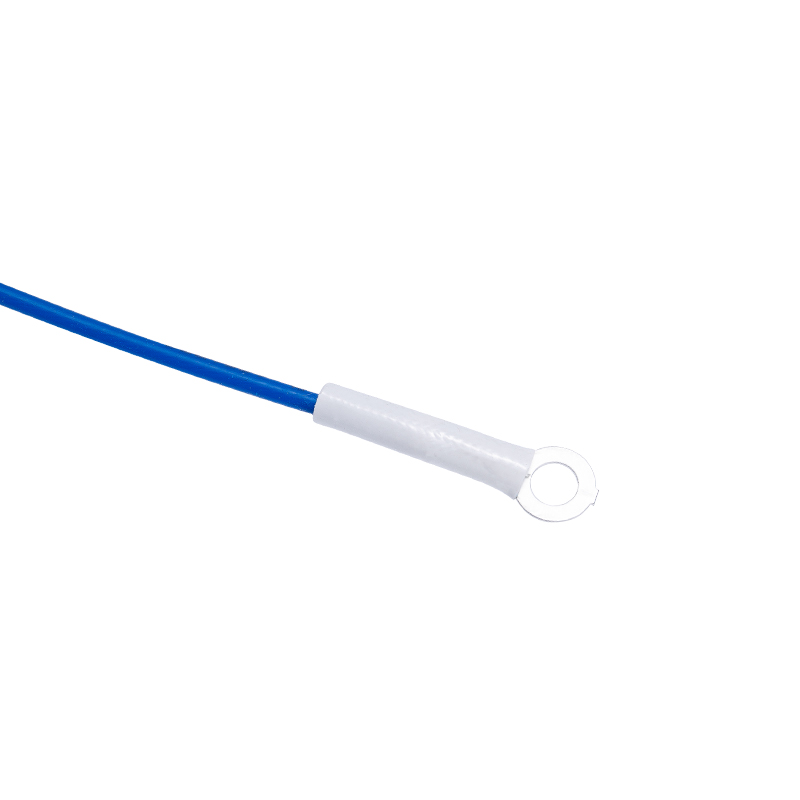 Oven Wiring High Temperature Resistant Electrical Wiring HarnessThe high temperature resistant wire harness for oven wiring is an important electrical component designed for oven equipment working in high temperature environments. ...View Product →
Harnesses of this kind, such as our oven high-temperature resistant electrical wiring harness, combine heat-rated conductors, protective sleeves and connectors that are ready for the assembly line rather than the bench.
Motors and industrial equipment
Motor winding leads have to cope with vibration, high voltage and the heat that comes with both. Silicone rubber motor lead wire is available in 1000 V, 3000 V, 6000 V and 10000 V classes, while irradiation-crosslinked XLPO versions cover 500 V and 1000 V duties where a thinner, tougher wall is preferred. In every case the flexibility of the lead matters, because a stiff lead transfers vibration into the terminal instead of absorbing it.
Automotive, EV and battery connections
Automotive control and power cables live with continuous vibration, wide temperature swings and, in electric vehicles, elevated voltage. Flexible conductors and crosslinked or silicone insulation help here, and the supplier's quality system matters as much as the wire itself, which is why an IATF 16949 certified process is often a prerequisite rather than a bonus.
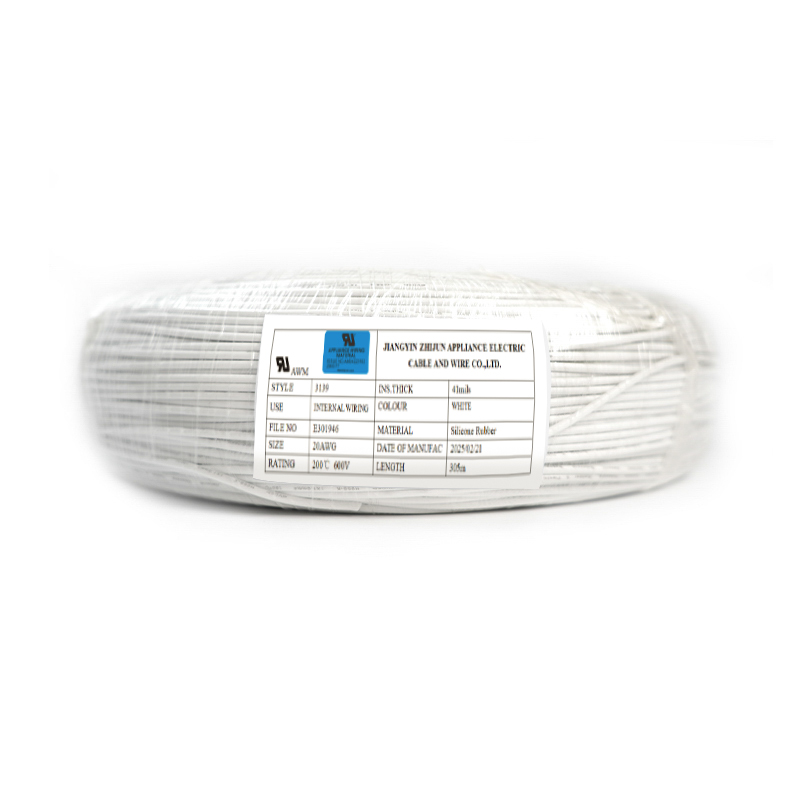 UL3139 Highly Flexible Silicone Battery High Temperature Resistant Connecting WireUL3139 certification standard: UL758, certification number: E301946 Rated voltage: 600V, suitable for low-voltage electrical equipment. Can it withstand a certain volt...View Product →
Battery and power connections inside compact packs benefit from the same thinking, and a highly flexible silicone battery connecting wire gives designers a conductor that tolerates tight bends without cracking the insulation.
Electronics, lighting and instrumentation
Not every flexible control cable is hot or heavy. Inside control panels, lighting fixtures and instruments, UL1007 and UL1015 PVC wires handle the general internal wiring, while PTFE types such as UL1330 and UL1331 fit tight, warm spaces where a thin wall is the only option. Matching the wire to the actual environment keeps cost sensible instead of over-specifying every run.
Design Details That Decide Flex Life
Once the materials are chosen, a handful of mechanical details determine whether the cable lasts five years or five months.
- Minimum bending radius: respect the manufacturer's figure, and remember that a dynamic radius is usually several times the static one.
- Movement profile: a cable that bends once during installation is a very different product from one that flexes continuously in a moving assembly.
- Strain relief: clamping the jacket rather than the conductors prevents pull force from reaching the terminals.
- Temperature derating: current capacity falls as ambient temperature rises, so a 105 °C wire run at 105 °C cannot carry its full rating.
- Chemical and moisture exposure: oils, detergents and steam gradually change insulation performance, especially in appliance and kitchen equipment.
If you want a deeper look at how silicone rubber behaves compared with other insulation under repeated flexing, our engineers have written a short technical note on how durable and flexible silicone rubber wire really is, which covers the topic in more detail.
Standards and Certifications Worth Asking About
Flexible control cable is frequently sold into more than one market, so approvals often decide which construction is viable. Depending on the destination, relevant marks include UL, VDE, TUV, CCC, CQC, KC, PSE and CE, with RoHS and REACH covering environmental compliance. On the manufacturing side, an ISO 9001 quality system confirms consistent process control, while IATF 16949 indicates that the plant is organised for automotive supply chains with traceability and disciplined change management. A supplier who can show both, plus the specific product approvals you need, saves you an entire round of verification work.
What to Send a Cable Supplier
A complete enquiry turns into a quotation much faster than a partial one. When you contact a manufacturer about a flexible control cable, include the following:
- Cross-sectional area or AWG, and the number of cores required.
- Voltage rating and the expected current per conductor.
- Operating temperature range and the surrounding environment.
- Movement profile: static, occasional bending, continuous flexing or torsion.
- Certifications required for your target market.
- Termination method, connector type and any harness assembly work needed.
- Sample quantity, annual volume and required delivery schedule.
With those details, an experienced supplier can usually propose two or three viable constructions and explain the cost difference between them, which is far more useful than a single quote with no alternatives.
A Practical Next Step
Flexible control cable works best when the conductor, insulation and mechanical design are matched to the job instead of chosen by habit. Since 2004 our team has supplied insulated wire, multicore cable, motor lead wire, automotive wire and finished appliance harnesses to manufacturers across the appliance, motor, electronics and automotive sectors, and we are happy to review a drawing or a sample and suggest a construction that fits both the performance target and the budget. Send us your specification, and we will tell you honestly which design we would build and why.