English
 عربى
عربى Español
Content
- 1 What Is a Multicore Cable?
- 2 Construction of Multicore Cable
- 3 Common Types of Multicore Cable
- 4 Screened vs Unscreened Multicore Cables
- 5 Core Identification and Color Coding
- 6 Key Applications of Multicore Cable
- 7 How to Select the Right Multicore Cable
- 8 Standards and Certifications for Multicore Cables
- 9 Installation Best Practices for Multicore Cables
- 10 Conclusion
What Is a Multicore Cable?
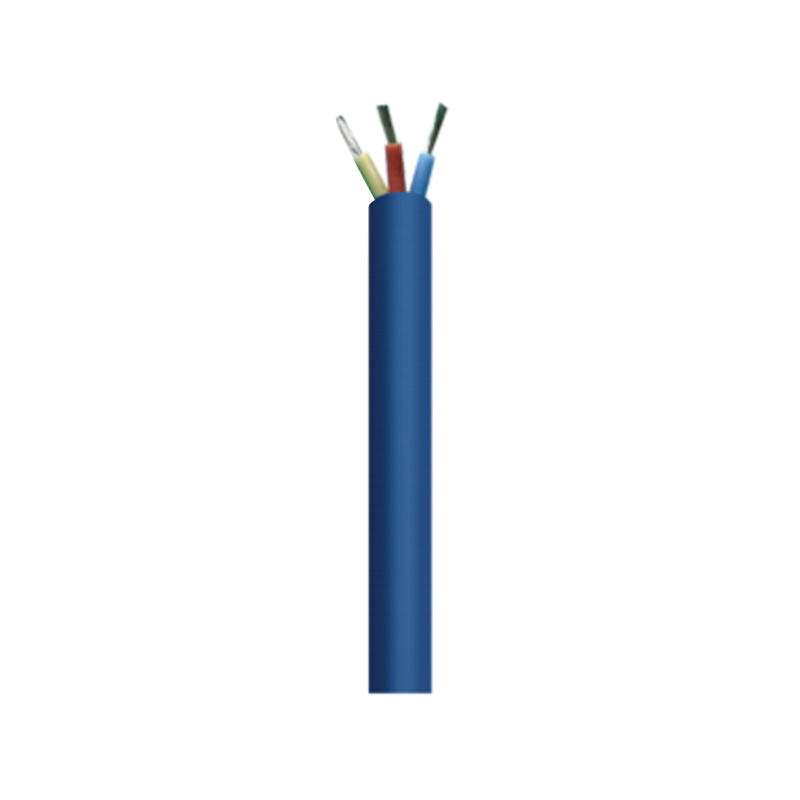
A multicore cable is an electrical cable that contains two or more individually insulated conductors enclosed within a single outer sheath. Unlike single-core cables, which carry only one conductor, multicore cables bundle multiple conductors together to transmit power, signals, or data through a single, organized cable assembly. This design reduces installation complexity, saves conduit space, and simplifies cable management in both industrial and commercial environments.
Multicore cables are found across virtually every sector of modern industry — from factory automation and process control to building services, telecommunications, and renewable energy systems. Their ability to carry multiple circuits within one cable run makes them a preferred choice wherever space efficiency, neat installation, and reliable performance are priorities. Understanding the construction, types, ratings, and selection criteria for multicore cables is essential for engineers, electricians, and procurement professionals who specify or install electrical systems.
Construction of Multicore Cable
The internal construction of a multicore cable is layered and purpose-built to ensure electrical performance, mechanical protection, and long service life. Each element of the construction contributes specific properties to the overall cable.
Conductors
Conductors are the core electrical elements of the cable. They are typically made from copper, though aluminum is used in larger power cables where weight reduction is important. Copper conductors may be solid (a single wire) or stranded (multiple fine wires twisted together). Stranded conductors offer greater flexibility and are preferred in applications where the cable will be moved, flexed, or bent repeatedly during service — such as in robotic arms or trailing cable applications. Conductor cross-sections in multicore cables range from as small as 0.1 mm² for signal cables up to 300 mm² or more for heavy-duty power cables.
Core Insulation
Each conductor is individually insulated to prevent short circuits between cores and to define the voltage rating of the cable. Common insulation materials include PVC (polyvinyl chloride), XLPE (cross-linked polyethylene), EPR (ethylene propylene rubber), and LSZH (low smoke zero halogen) compounds. The choice of insulation material affects the cable's temperature rating, chemical resistance, and behavior in fire conditions. XLPE, for example, supports higher operating temperatures (up to 90°C) compared to standard PVC (typically rated to 70°C), making it preferable in high-load power distribution applications.
Fillers, Binders, and Inner Sheath
After the insulated cores are laid up together — typically in a helical configuration to maintain roundness and flexibility — non-conducting fillers are introduced to fill gaps between the cores. A binder tape is then applied to hold the assembly together before an inner sheath (bedding) is extruded over it. This inner sheath provides mechanical protection to the cores and serves as a base layer for any armoring applied over it.
Armoring and Outer Sheath
For cables installed in demanding environments — buried underground, routed through conduits with abrasive edges, or exposed to mechanical impact — armoring is applied over the inner sheath. The most common armoring types are Steel Wire Armour (SWA) and Steel Tape Armour (STA), which provide crush and impact resistance. Aluminum Wire Armour (AWA) is used where magnetic field interference must be minimized. The outer sheath, typically extruded PVC or LSZH compound, provides the final layer of environmental and mechanical protection.
Common Types of Multicore Cable
Multicore cables are manufactured in a wide range of types, each optimized for different electrical and environmental requirements. The most commonly specified types include:
| Cable Type | Construction Feature | Typical Application |
| PVC/SWA/PVC | Steel wire armoured, PVC insulated and sheathed | Underground power distribution, industrial wiring |
| XLPE/SWA/PVC | XLPE insulated, steel wire armoured | Medium voltage power cables, high-load circuits |
| LSZH Multicore | Low smoke zero halogen sheath and insulation | Public buildings, tunnels, rail, marine |
| Screened Multicore | Overall or individual core screening (foil/braid) | Instrumentation, control systems, data transmission |
| Flexible Multicore | Fine stranded conductors, rubber or PUR sheath | Portable equipment, trailing cables, robotics |
| Fire Resistant Multicore | Mica tape insulation, maintains circuit integrity in fire | Emergency lighting, fire alarm systems, evacuation circuits |
Screened vs Unscreened Multicore Cables
One of the most important distinctions in multicore cable specification is whether the cable is screened (shielded) or unscreened. This decision has significant implications for signal integrity and electromagnetic compatibility (EMC).
Unscreened Multicore Cables
Unscreened multicore cables contain no electromagnetic shielding layer. They are suitable for power distribution and general wiring applications where the conductors carry relatively high voltages and currents, and where electromagnetic interference (EMI) is not a significant concern. Standard SWA power cables used for feeding industrial machinery or distribution panels are typically unscreened.
Screened Multicore Cables
Screened multicore cables include one or more layers of metallic shielding — typically aluminum/polyester foil, copper braid, or a combination of both — applied either around individual pairs/cores or around the entire core assembly (overall screen). The screen is connected to earth at one or both ends to provide a low-impedance path for induced interference currents, effectively preventing EMI from entering or leaving the cable. Screened multicore cables are essential in instrumentation and control applications where low-level analog signals (4–20 mA current loops, thermocouple outputs, strain gauge signals) must be transmitted without noise corruption from adjacent power cables or variable frequency drives.
Core Identification and Color Coding
With multiple conductors inside a single cable, clear and consistent core identification is critical for safe installation and maintenance. Multicore cables use color-coded insulation and, for cables with large core counts, numbered or alphanumeric printing on each core.
In Europe, harmonized color coding standards (IEC 60446) define colors for specific functions: brown for line (L1), black for line (L2), grey for line (L3), blue for neutral (N), and green/yellow for protective earth (PE). For multicore control and instrumentation cables with many cores, sequential numbering printed on the core insulation — such as 01 through 24 for a 24-core cable — is the standard approach. North American practice under NEC and UL standards differs somewhat, with black, red, and blue commonly used for phase conductors and white or grey for neutral conductors.
Key Applications of Multicore Cable
The versatility of multicore cable means it serves a broad spectrum of industries and installation environments. The following are among the most significant application areas:
- Industrial automation and control panels: Multicore control cables connect PLCs, sensors, actuators, and operator interfaces within and between control panels and field devices. Their organized multi-conductor format reduces wiring time and simplifies fault finding.
- Building services and infrastructure: SWA multicore power cables are the backbone of electrical distribution in commercial buildings, hospitals, and data centers, feeding sub-distribution boards, HVAC equipment, and lighting circuits from main switchrooms.
- Oil, gas, and petrochemical plants: Armored and screened multicore cables are used extensively in hazardous area installations for power, instrumentation, and data transmission, often with LSZH or specialized compound sheaths to meet stringent fire and chemical resistance requirements.
- Renewable energy installations: Solar farms and wind turbines rely on multicore cables for interconnections between inverters, transformers, monitoring systems, and grid connection points, often in outdoor or underground installations requiring UV resistance and moisture protection.
- Rail and transportation: Rolling stock, trackside signaling, and station infrastructure use LSZH and fire-resistant multicore cables to meet strict fire safety standards in confined environments.
- Marine and offshore: Vessels and offshore platforms use multicore cables designed for resistance to seawater, oils, and mechanical stress, often manufactured to IEC 60092 or Lloyd's Register specifications.
How to Select the Right Multicore Cable
Selecting the correct multicore cable for a given application requires a systematic evaluation of several interdependent parameters. Getting this specification right from the outset prevents premature cable failure, regulatory non-compliance, and costly retrofitting.
- Voltage rating: The cable's rated voltage (expressed as U₀/U, e.g. 0.6/1 kV) must be equal to or greater than the system operating voltage. Low-voltage power distribution typically uses 0.6/1 kV rated cables, while medium-voltage applications require 3.6/6 kV, 6/10 kV, or higher.
- Current carrying capacity: The conductor cross-section must be sized to carry the maximum load current without exceeding the cable's thermal rating, taking into account installation method, ambient temperature, and grouping derating factors per IEC 60364 or BS 7671.
- Number of cores: The core count must match the circuit requirements — for example, a three-phase power circuit with earth requires a 4-core cable (3L + E), while a three-phase circuit with neutral and earth requires 5 cores.
- Environmental conditions: Installation environment determines the sheath material and armoring type. Underground direct burial requires SWA cables; installations in chemical environments require chemically resistant sheaths; fire-critical circuits require fire-resistant cable complying with IEC 60331 or BS 6387.
- Flexibility requirement: Fixed installations use rigid or semi-rigid cables; applications requiring regular movement or flexing demand highly flexible cables with fine-stranded conductors and robust elastomeric sheaths.
- EMC requirements: Any application transmitting analog instrumentation signals or operating near variable frequency drives or high-power switching equipment should specify screened multicore cable to maintain signal integrity.
Standards and Certifications for Multicore Cables
Multicore cables are manufactured and tested to a range of national and international standards that define their electrical, mechanical, and fire performance properties. Key standards include:
- IEC 60502: Covers power cables with extruded insulation for rated voltages from 1 kV to 30 kV — the primary standard for industrial and infrastructure power cables worldwide.
- BS 5467 / BS 6346: British standards for armored cables with XLPE or PVC insulation widely specified in UK and Commonwealth projects.
- IEC 60332 / EN 50266: Fire propagation tests for individual cables and cable bundles, ensuring cables do not spread flame under defined test conditions.
- IEC 60331 / BS 6387: Circuit integrity tests for fire-resistant cables, confirming that cables maintain electrical function during and after fire exposure.
- EN 50525: European harmonized standard series covering low-voltage energy cables for general applications, flexible cords, and lift cables.
Specifying cables that comply with the relevant standards for the application and region ensures not only safety and performance but also regulatory compliance and insurance validity.
Installation Best Practices for Multicore Cables
Even the best-specified cable will underperform if installed incorrectly. Proper installation practices protect the cable from mechanical damage, ensure reliable terminations, and maintain long-term electrical performance:
- Always observe the manufacturer's minimum bend radius — typically 6–12 times the cable's overall diameter for armored cables — to avoid damaging conductors or insulation during pulling and routing.
- Use appropriate cable cleats and supports at the intervals specified in IEC 61914 to prevent cable movement under fault current conditions and to manage the cable's weight over long runs.
- Terminate screened cables with proper EMC cable glands that maintain 360° screen continuity at the point of entry into enclosures, avoiding pigtail earth connections that compromise screening effectiveness at high frequencies.
- Separate power and instrumentation multicore cables in cable trays — or use dedicated trays — to minimize inductive coupling between power and signal circuits even when screened cables are used.
Conclusion
Multicore cables are indispensable components in modern electrical and control systems, offering a practical and space-efficient means of routing multiple circuits through a single cable run. From the basic construction principles of conductors, insulation, and armoring, to the specialized performance of screened instrumentation cables and fire-resistant emergency circuit cables, the multicore cable family encompasses an enormous range of products engineered for virtually every industrial, commercial, and infrastructure application. By understanding the key construction features, types, standards, and selection criteria outlined here, engineers and installers can confidently specify the right multicore cable for any given project — ensuring safety, reliability, and regulatory compliance from installation through the full service life of the system.