English
 عربى
عربى Español
Content
- 1 Basic Construction and Materials
- 2 Temperature and Thermal Performance
- 3 Flexibility and Mechanical Durability
- 4 Electrical Properties and Current Carrying Capacity
- 5 Chemical Resistance and Environmental Factors
- 6 Fire Safety and Flame Retardancy
- 7 Manufacturability: Terminations, Soldering and Crimping
- 8 Cost and Supply Considerations
- 9 Applications: When to Choose Silicone vs PVC
- 10 Standards, Testing and Certification
- 11 Practical Selection Checklist
- 12 Conclusion
Choosing the correct insulation for lithium battery wiring is a critical decision for safety, reliability, and manufacturability. Two common choices are silicone rubber insulated wire and PVC (polyvinyl chloride) insulated wire. Both are used widely, but they perform very differently under heat, mechanical flexing, chemical exposure, and high-current conditions. This article provides a practical, engineering-focused comparison to help designers, technicians, and purchasing teams decide which wire type is best for lithium battery packs, EV modules, e-bikes, power tools, and other energy-storage applications.
Basic Construction and Materials
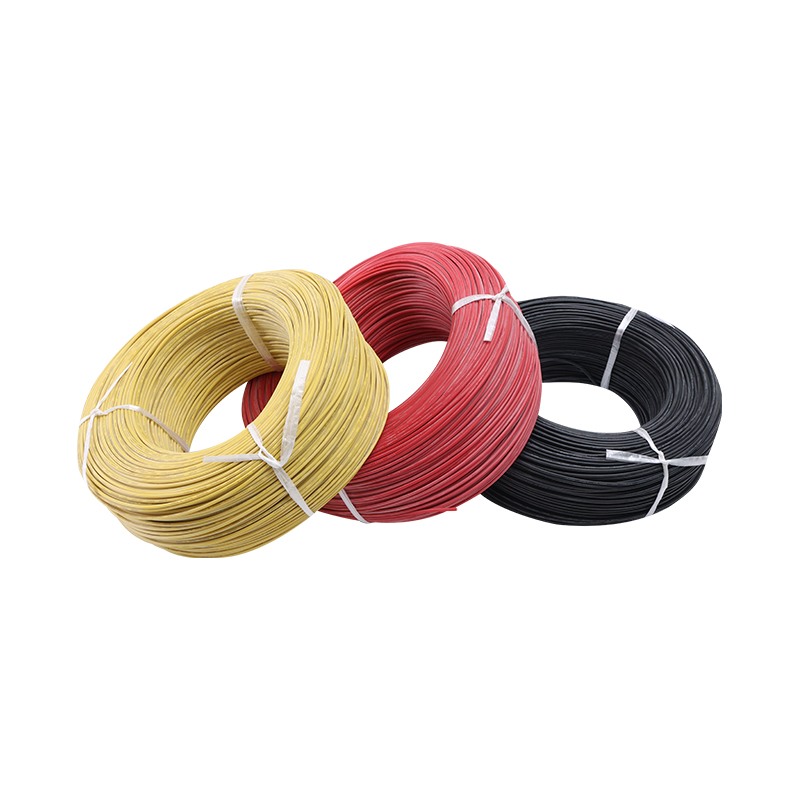
At the core, both silicone and PVC battery wires use copper conductors—solid or stranded—often tinned to improve solderability and corrosion resistance. The key difference is the insulating jacket. Silicone rubber wires use a high-temperature silicone elastomer as the primary insulation (sometimes combined with a silicone outer jacket), while PVC wires use a thermoplastic compound that softens when heated and hardens when cooled. These material differences drive the major functional contrasts between the two wire types.
Conductor and strand structure
Battery applications often require highly flexible cables comprised of many thin strands (fine-stranded or ultra-flexible) to resist metal fatigue where wires move during assembly, vibration, or thermal cycling. Silicone insulation is well-matched to ultra-fine strand constructions because it preserves flexibility and does not embrittle at low temperatures. PVC wires are available in flexible strand counts too, but the overall cable remains stiffer due to the insulation.
Temperature and Thermal Performance
One of the most important differences for lithium battery systems is temperature tolerance. Silicone rubber insulation typically has an operating temperature range from roughly –60 °C up to +180 °C (some specialized compounds go higher). PVC, depending on formulation, commonly operates from –20 °C to around +80 °C (some heat-resistant PVC up to +105 °C). In battery packs that can experience high local temperatures (near cells, MOSFETs, or during fast charging/discharging), silicone's high-temperature stability is a major advantage.
Heat aging and long-term stability
Silicone retains elasticity and dielectric properties after prolonged heat exposure better than PVC, which tends to harden, crack, or lose flexibility when aged thermally. For applications with repeated thermal cycles or potential hotspot exposure, silicone dramatically reduces insulation failure risk.
Flexibility and Mechanical Durability
Silicone insulated wires are notably softer and more flexible than PVC equivalents. This translates into higher flex-life—silicone wires can endure far more bending cycles before the conductor or insulation fails. In battery packs where harnesses are routed through tight spaces, connectors are frequently engaged/disengaged, or where vibration is present (e.g., e-bikes, drones, EV modules), silicone wires reduce the chance of strand breakage and insulation fatigue.
Abrasion and cut resistance
PVC tends to have better inherent abrasion resistance in thin gauges due to its harder surface, whereas silicone is softer and can be more prone to mechanical cuts if unprotected. In practice, silicone cables are often used with additional sleeving, braided shields, or over-jackets to improve abrasion resistance while preserving flexibility.
Electrical Properties and Current Carrying Capacity
Electrical performance (resistance and ampacity) is governed primarily by conductor size, strand count, and copper quality rather than insulation. However, insulation thickness affects heat dissipation. Silicone insulation can tolerate higher conductor temperatures, which may permit higher short-duration currents without insulation damage. Both wire types are available in tinned copper versions favored in battery applications for solderability and corrosion resistance.
Chemical Resistance and Environmental Factors
Battery systems may encounter electrolytes, cleaning solvents, oils, or UV exposure. Silicone shows excellent resistance to many chemicals and maintains flexibility in a wide temperature range. It is also inherently UV-stable compared to many PVC compounds. PVC can be formulated with stabilizers and UV inhibitors, but prolonged exposure to UV or certain solvents will embrittle PVC faster than silicone. For outdoor and harsh-environment battery packs, silicone is generally more robust.
Fire Safety and Flame Retardancy
Fire behavior differs: PVC is inherently flame-retardant to some degree because it contains chlorine, which can inhibit combustion, though it produces toxic fumes and HCl gas when burned. Silicone rubber can be formulated to be flame-retardant and tends to char rather than drip; it produces less acidic smoke. For safety-critical battery applications, designers must consult standards (UL, IEC) and prefer wires with demonstrated flame and smoke characteristics appropriate to the product's regulatory requirements.
Manufacturability: Terminations, Soldering and Crimping
Practical assembly concerns influence wire choice. Silicone insulation melts at much higher temperatures and is more tolerant during soldering—however, silicone cannot be heat-shrunk in the same way as PVC unless special heat-shrinkable sleeves are used. PVC insulations respond to heat-shrink and easy crimping; they may soften at soldering temperatures and require masking. Crimp quality depends on conductor fill and strand bonding—both wire types are available in constructions optimized for reliable crimping and machine termination.
Cost and Supply Considerations
PVC-insulated wire is typically less expensive than silicone-insulated wire. For high-volume commodity products where operating temperatures and flexibility demand are low, PVC is often chosen to reduce BOM cost. Silicone wire commands a premium due to raw material and processing complexity. However, in applications where replacement, warranty claims, or safety risk from failure are expensive, the higher initial cost of silicone can be justified economically.
Applications: When to Choose Silicone vs PVC
Selecting the right wire depends on a matrix of factors including temperature, flex-life, space constraints, chemical exposure, regulatory requirements, and cost targets. Typical recommendations:
- Choose silicone rubber wire for high-temperature zones, high-flex harnesses, EV battery modules, PCM/thermostat-proximal wiring, and outdoor or harsh environments.
- Choose PVC wire for fixed routing in low-temperature, low-flex applications where cost sensitivity is paramount and where standard flame/ smoke characteristics are acceptable.
- Consider hybrid approaches—silicone for cell-interconnects and high-stress legs, PVC for bulk power runs that remain stationary but require lower cost.
Standards, Testing and Certification
Battery wiring must meet relevant standards: UL 758/1581 for appliance wiring, UL 10078 for photovoltaic, ISO 16750 for automotive electrical, and various IEC/ISO standards for EV and energy storage. Evaluate wire datasheets for temperature rating, VW-1 / UL94 flame tests, VW-1, UL VW-1, and aging/cycle test data. For mission-critical battery packs, request test reports showing flex cycles to failure, thermal aging, and chemical exposure results from the supplier.
| Characteristic | Silicone Rubber Wire | PVC Wire |
| Max Temp (typical) | ~180 °C | ~80–105 °C |
| Min Temp (typical) | ~−60 °C | ~−20 °C |
| Flex-Life | Very high | Moderate |
| Abrasion | Lower (soft) — sleeve recommended | Higher (harder surface) |
| Chemical/UV Resistance | Excellent | Variable |
| Cost | Higher | Lower |
Practical Selection Checklist
When specifying battery wiring, use this checklist to make an informed choice:
- Define maximum expected ambient and hotspot temperatures and choose insulation rating with margin.
- Estimate flex cycles during lifetime—choose silicone for high-cycle paths.
- Evaluate space and routing—thin silicone wires allow tight radii without conductor stress.
- Consider chemical exposure and UV—prefer silicone in harsh environments.
- Check termination method compatibility: crimping, soldering, or welding—and confirm supplier crimps/heat tolerance.
- Verify standards compliance and request test data from the vendor.
Conclusion
Silicone rubber and PVC battery wires each have a role in lithium battery systems. Silicone excels where high temperature tolerance, extreme flexibility, chemical resistance, and long flex life are required—making it the preferred choice for high-performance battery packs, EVs, and rugged applications. PVC remains a cost-effective option for stationary, lower-temperature wiring where budget constraints dominate and the environmental stresses are limited. The right choice balances operational demands, safety requirements, manufacturability, and total cost of ownership. Always validate material selection with real-world test data and consider hybrid harness strategies to optimize performance and cost.