English
 عربى
 Español

Content
- 1 What Cable Abrasion Protection Really Means
- 2 Where Abrasion Damage Shows Up First
- 3 Material Choices and How They Compare
- 4 Braided Constructions: A Simple, Proven Upgrade
- 5 Sleeves, Tubes and Shrink Tubing as Secondary Protection
- 6 Standards and Testing Worth Knowing
- 7 A Practical Selection Checklist
- 8 Where We Fit In
Cable abrasion protection is one of those subjects that stays quiet until something rubs through. Then it becomes the only thing anyone wants to talk about: a field return, a scorched connector, a harness that passed every electrical test on the bench but failed after six months of vibration against a metal bracket.
We have been building wire and cable for appliance, motor and automotive customers for more than two decades, and abrasion damage is still one of the most common physical failure modes we see in returned samples. The encouraging part is that it is also one of the easiest problems to design out, as long as the jacket, the construction and the routing are matched to the conditions the cable will actually meet.
What Cable Abrasion Protection Really Means
Abrasion protection is not one single property. It is the combined ability of insulation, jacket, braid and any added sleeve to survive mechanical wear without losing dielectric strength or exposing the conductor. A cable can be perfectly rated for voltage and temperature and still fail mechanically.
The wear usually comes from a handful of sources:
- Repeated rubbing against a fixed surface, such as a wire passing through a metal panel opening.
- Vibration against a neighbouring component or another cable in the same bundle.
- Sharp edges, burrs or screw threads that scrape the insulation during assembly or service.
- Flexing over a small radius, where the jacket is squeezed and dragged at the same time.
- Handling during installation, including pulling through conduits and tight channels.
It also helps to separate two mechanisms that are often lumped together. Sliding abrasion is gradual and cumulative, so the insulation thins over thousands of small movements. Scrape or edge abrasion is more local and more aggressive: a single sharp edge can cut through a soft jacket in one event. Dynamic applications such as cable carriers combine both and add flex fatigue on top.
Where Abrasion Damage Shows Up First
In practice, wear almost never happens along the middle of a straight run. It happens at the transition points, where the cable exits a housing, crosses a hinge, or passes close to a moving part. These are the places we see it most often:
- Heating appliances. In air fryers, ovens and steam-and-bake machines, internal wiring runs close to heating elements and moving parts. Insulation softens with heat, which makes it easier to scuff.
- Motors. Lead wire leaves the winding, passes through a housing opening and then bends. That exit point is a classic abrasion site, especially when the lead is also carrying high voltage.
- Automotive and EV routing. High-voltage cable running along a chassis sees continuous vibration plus occasional contact with brackets and clips.
- Doors, lids and hinges. Any cable that crosses a moving joint gets both flexing and rubbing.
- Battery and power connections. Short, stiff cables in tight enclosures tend to rub against the enclosure wall.
If you can identify those transition points early, you can usually solve most of the problem with a construction change rather than a complete redesign.
Material Choices and How They Compare
The first lever is the insulation or jacket compound. Softer materials feel nicer to handle but wear faster; harder, tougher compounds resist scuffing but are stiffer to route. Temperature matters too, because many materials lose mechanical strength as they heat up.
| Material or construction | Typical temperature range | Abrasion behaviour | Where it fits |
|---|---|---|---|
| PVC | 70 to 105°C | Moderate; soft grades scuff easily, harder grades hold up better | General internal wiring on fixed routes |
| Silicone rubber | 150 to 200°C | Good flexibility, moderate wear resistance; cuts fairly easily on sharp edges | Heat-affected appliances, flexible connections |
| Fiberglass braid over silicone | 200°C and above | Very good; the braid absorbs the wear while the silicone keeps dielectric strength | Ovens, heaters and other high-temperature zones |
| PTFE / FEP | 200 to 260°C | Excellent thermal and chemical resistance, moderate mechanical wear resistance | High-temperature electronics and tight spaces |
| Irradiated crosslinked XLPE / XLPO | 105 to 150°C | Very good mechanical toughness; resists scrape and cut well | Automotive, motor leads, equipment wiring |
None of these is universally best. A silicone wire that survives 200°C may still be the wrong answer next to a sharp metal edge, where a crosslinked or braided construction would last far longer. If you want a broader overview of how these families differ in temperature and construction, our article on the main types of high-temperature wire goes into more detail.
Braided Constructions: A Simple, Proven Upgrade
When the environment is both hot and mechanically demanding, adding a braid is often the most cost-effective answer. A glass fiber braid over silicone insulation gives you the temperature range of silicone plus a hard outer layer that takes the rubbing instead of the dielectric underneath.
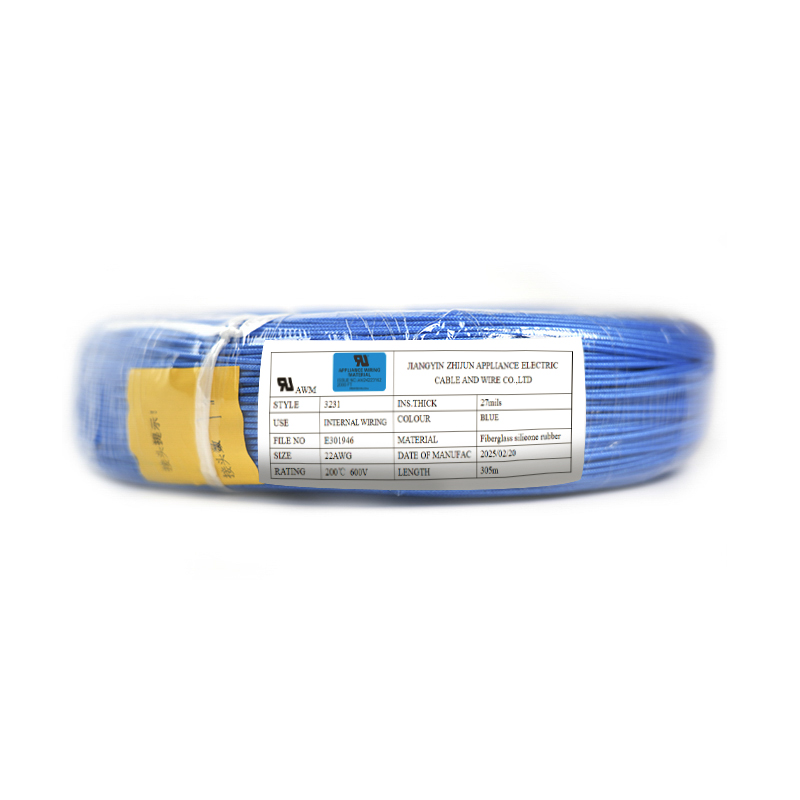 UL3231 Glass Fiber Braided Silicone High-Temperature WireFor hot, mechanically demanding runs, this 600V silicone-insulated wire adds a glass fiber braid for abrasion and thermal protection.View Product →
Constructions like UL3231 are typical of this approach: a flexible silicone core with a braided outer layer, used where a plain jacket would slowly wear through. For multi-core runs, a braided multicore such as UL3122 keeps several conductors together with the same outer protection, which also reduces internal movement inside the bundle.
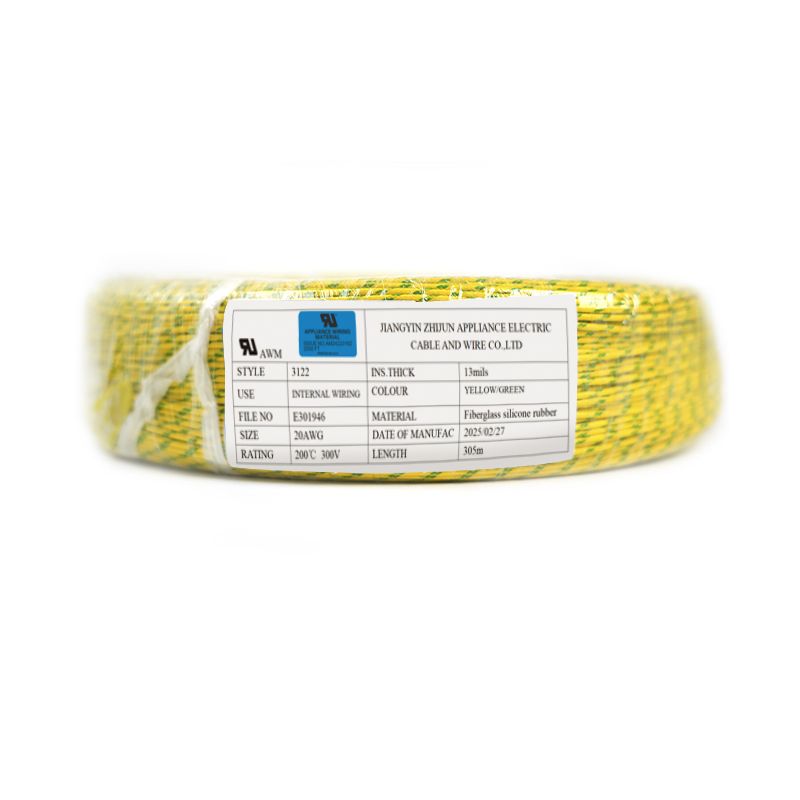 UL3122 7-Core Glass Fiber Braided Silicone WireFor multi-core high-temperature runs, this 18 AWG braided silicone wire keeps seven conductors together while adding abrasion resistance and 200°C heat tolerance.View Product →
Two practical notes. First, a braid protects the cable but can itself abrade whatever it touches, so add a sleeve or grommet at the contact point if the surface matters. Second, braided constructions are harder to strip cleanly, so specify them early rather than switching at the last minute.
Sleeves, Tubes and Shrink Tubing as Secondary Protection
Not every abrasion problem needs a new cable. Often the cheaper fix is to leave the wire as it is and protect the contact point. Braided silicone sleeves, silicone tubing, PVC heat-shrink and PTFE sleeves all do slightly different jobs: some add mechanical armour, some add thermal insulation, and some do both.
A glass fiber braided silicone sleeve is a good example of a part that solves several problems at once, resisting high pressure and high temperature while keeping the cable inside from rubbing directly against metal.
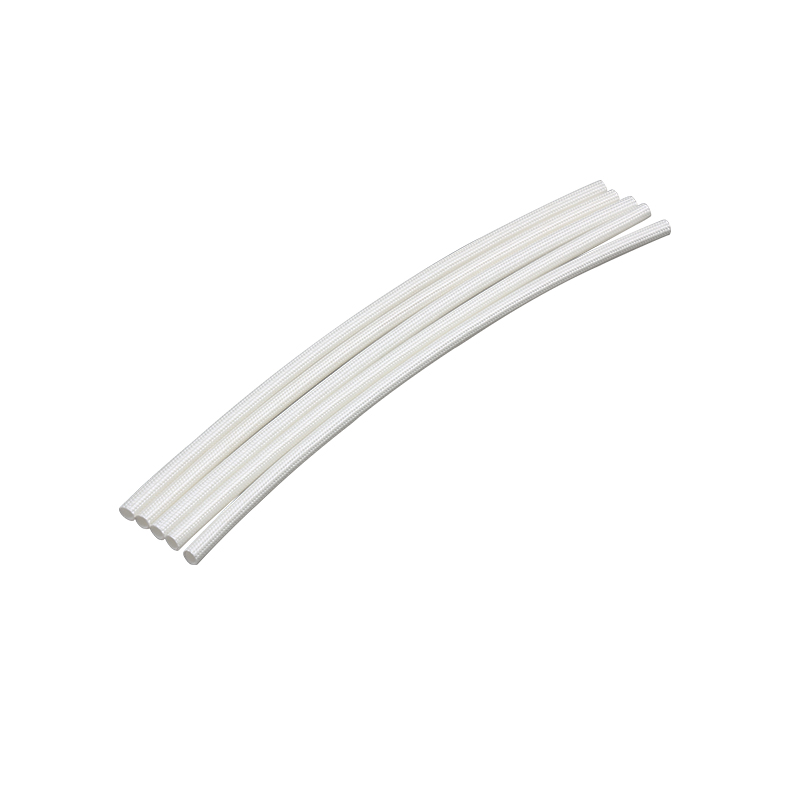 Glass Fiber Braided Silicone Sleeve for Cable ProtectionUse this 600V sleeve where cables rub against metal in high-temperature areas; its silicone and glass fiber braid construction is rated from -60°C to 200°C.View Product →
When you specify a sleeve, check three things: the temperature rating should match the wire it covers, the inner diameter should be tight enough not to slide but loose enough to assemble, and the sleeve should be fixed at both ends. A sleeve that migrates away from the wear point protects nothing.
Standards and Testing Worth Knowing
Abrasion resistance is measured, not guessed, and several standards families cover it. The exact test depends on the market and the product type, but these are the ones that come up most often in our customers' specifications:
- Automotive: ISO 6722 includes scrape abrasion testing for single-core cables, alongside temperature and voltage requirements.
- North America: UL 1581 covers many physical test methods for wires and cables, and individual UL styles add their own requirements.
- Europe: the EN 60811 series includes mechanical test methods used alongside VDE and harmonised cable standards.
- Custom OEM tests: many appliance makers define their own needle-scrape or rub test based on how the harness is actually routed.
It is worth asking your supplier which test method applies to your specification, because a good result in one test does not automatically transfer to another geometry or load.
A Practical Selection Checklist
Before choosing a construction, work through these points in order:
- Identify every point where the cable touches something other than itself, and mark the ones that move.
- Record the maximum continuous temperature at the contact point, not the ambient temperature of the enclosure.
- Decide whether the wear is sliding, scraping or both.
- Choose the material that meets the temperature requirement first, then upgrade the construction if the wear is severe.
- Add a sleeve, grommet or clip at the worst contact points rather than upgrading the whole run.
- Ask for a sample and a test report before committing to volume production.
Following that order usually avoids the two most common mistakes: paying for a high-temperature cable where a simple sleeve would have been enough, and saving money on a jacket that fails in the field eighteen months later.
Where We Fit In
We are Jiangyin Zhijun Appliance Electric Cable and Wire Co., Ltd., a manufacturer based in Jiangyin, Jiangsu, working with silicone rubber, PVC, irradiated crosslinked and PTFE wire families as well as finished harness assemblies. Our experience sits mostly in appliance, motor and automotive supply chains, where abrasion protection is rarely an academic question. It is one of the reasons a harness comes back.
Because we both extrude wire and build the harness, we can usually adjust the construction rather than just the specification. If the problem is at the exit of a heating chamber, a braided wire plus a short sleeve is often enough. If it is inside a moving joint, we would look at the routing first. For customers working on cooking appliances specifically, our kitchen appliance wiring harnesses are developed with these heat-and-wear conditions in mind.
If you are working through an abrasion issue now, send us the routing, the temperature and a photo of the failure point. That is usually enough to point you toward a construction that will last.