English
 عربى
 Español

Content
- 1 What Cables for Renewable Energy Really Need to Do
- 2 Heat, Flexibility, and Certification: The Details That Decide Performance
- 3 Solar: From Panel to Inverter, Small Cables Carry Critical Signals
- 4 Wind: Vibration, Heat, and Service Access
- 5 Battery Storage and Electrified Transport: High Voltage in Tight Spaces
- 6 How to Specify Cables for Renewable Energy Projects Without Overbuying
- 7 A Practical View From the Factory
Renewable energy is often described through the big picture: solar farms stretching to the horizon, wind turbines turning offshore, and battery racks filling warehouses. Behind each of those systems is a less visible network of cables, wires, and harnesses that carry power, signals, and control. In our daily work as a cable and harness manufacturer, we see the practical side of this market: most renewable-energy equipment needs a mix of rugged power cables, flexible control wires, and heat-resistant leads that fit into tight spaces and keep working through years of thermal cycling and vibration.
That is why “cables for renewable energy” should not be treated as one product category. The right construction depends on where the cable sits: inside a solar inverter, a wind turbine nacelle, a battery storage cabinet, a tracker motor, or a charging system. The following sections walk through the main selection points without pretending every renewable project needs the same cable.
What Cables for Renewable Energy Really Need to Do
At the utility scale, medium- and high-voltage power cables, PV wire, and submarine cables dominate headlines. Those products have their own standards and supply chains. Our focus is upstream and inside the equipment: flexible wires and harnesses that connect modules, fans, pumps, sensors, contactors, motors, and control boards. This is where heat, flexing, and certification often matter more than raw current capacity.
A useful way to think about the market is by stress, not by label. A solar inverter may need cable that tolerates heat, UV, and DC voltage. A wind turbine may demand vibration resistance and serviceability. A battery cabinet may require flame-retardant insulation, tight bend radii, and careful separation of power and signal circuits. The common thread is reliability.
| Application | Typical cable role | Selection focus |
|---|---|---|
| Solar inverter or combiner box | DC input, AC output, control and sensing | Voltage rating, sunlight and UV exposure, heat, flame resistance, connector compatibility |
| Solar tracker | Motor power, limit switches, sensors | Flexibility, moisture, temperature, UV, small bend radius |
| Wind turbine nacelle and control cabinet | Pitch and yaw control, sensors, cooling, auxiliary power | Vibration, oil, temperature, EMI, service access |
| Battery storage | DC bus, BMS sensing, thermal management | High voltage, flame resistance, flexibility, creepage, color coding |
| Electrified transport and charging | High-voltage DC, signal, pilot circuits | Voltage, thermal load, abrasion, connector system |
Heat, Flexibility, and Certification: The Details That Decide Performance
Material choice is usually the first real decision. Silicone rubber offers excellent heat resistance and remains flexible at low temperatures, which makes it useful for motor leads, heater circuits, and tight equipment interiors. Braided silicone adds a glass-fiber braid for abrasion protection while keeping the silicone core flexible. Irradiated crosslinked XLPE or XLPO is compact, flame retardant, and well suited to panel and control wiring. PVC is cost-effective in protected areas but has tighter temperature limits. PTFE is chosen for high heat and chemical exposure, usually where a thin wall and higher cost can be justified.
For equipment that sees both heat and movement, a braided silicone multi-core construction can be a practical middle ground. The braid protects the insulation from scuffing, while the silicone core stays flexible. One example in our range is the UL3122 seven-core braided silicone wire, often considered for internal control runs where heat and mechanical protection are both concerns.
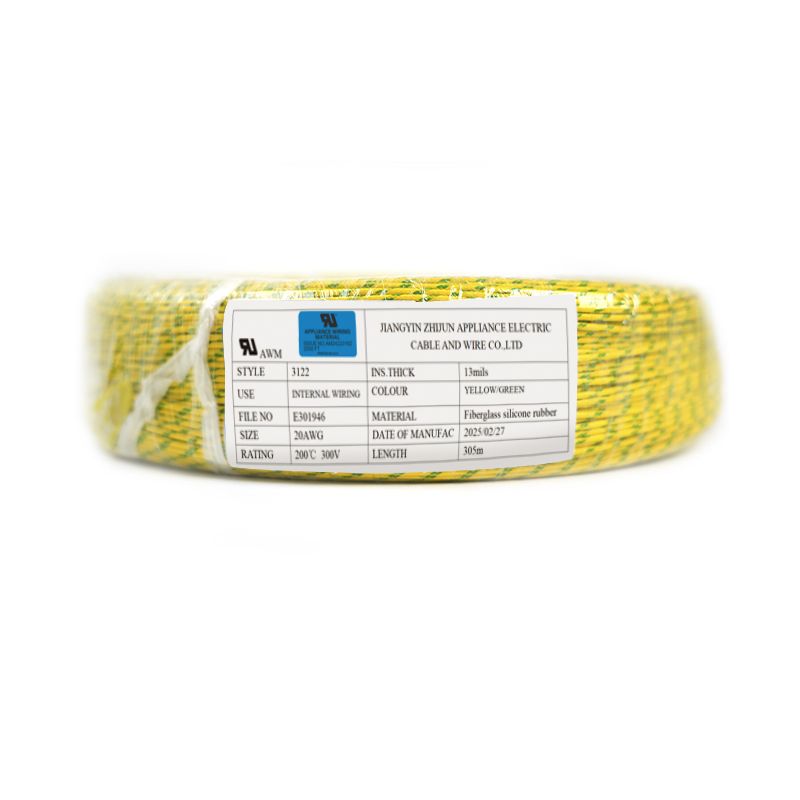 UL3122 7-Core Braided Silicone Wire, 18 AWGSeven-core glass-fiber braided silicone wire for internal control runs needing heat resistance and mechanical protection; rated to 200°C and UL3122.View Product →
Certification is not a decorative badge. UL, VDE, CCC, CQC, IEC, and automotive standards each define insulation thickness, temperature rating, voltage, and test methods. If a renewable-energy assembly is exported, the cable standard should match the end-product market. This is also why we ask for the target certification before recommending a construction. For a broader explanation of temperature ratings and insulation choices, this high-temperature wire guide is a useful companion. You can also review our silicone rubber wire range if the application is primarily heat and flexibility.
Solar: From Panel to Inverter, Small Cables Carry Critical Signals
In solar, the most visible cables are the DC strings and AC collection cables. They need to be UV stable, moisture resistant, and rated for the site’s voltage and temperature. Inside the inverter, combiner box, tracker controller, or monitoring cabinet, the duty changes. Cables may run near heat sinks, fans, reactors, and power electronics. They may be bundled, flexed during assembly, or exposed to morning and evening thermal cycling.
For these internal runs, a multi-core sheathed cable can simplify routing and protect conductors from abrasion. A heat-resistant silicone rubber multicore cable like YGZ is one option when the cable needs to remain flexible in a warm enclosure and the voltage rating suits the circuit.
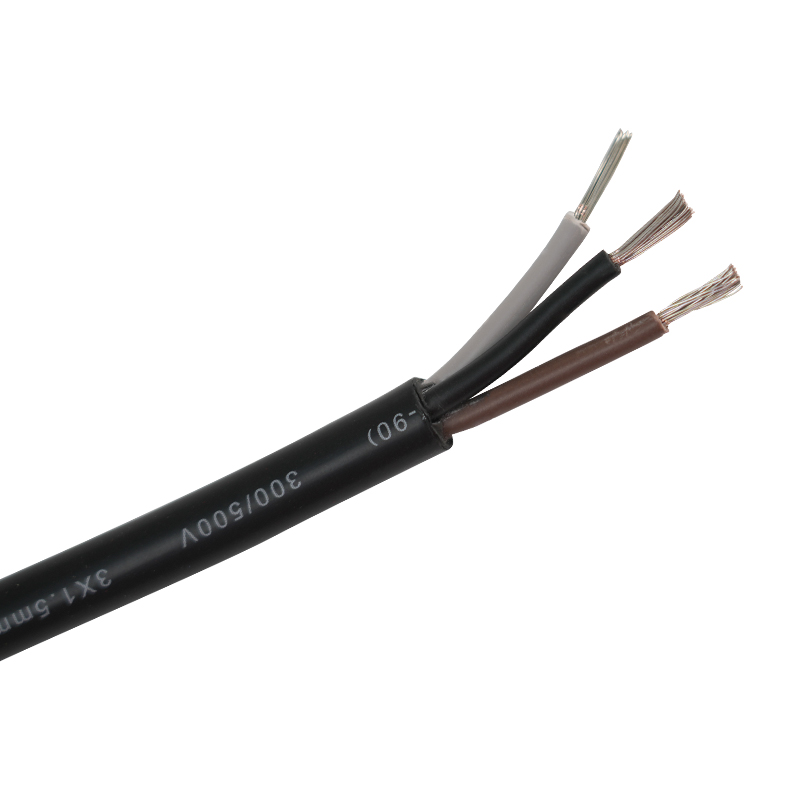 YGZ Heat-Resistant Silicone Rubber Multi-Core CableFlexible silicone-insulated and sheathed multi-core cable for protected internal runs and warm enclosures; rated 600/1000V and -60°C to +180°C.View Product →
Do not assume every cable in a solar plant must be PV wire. PV wire is essential for exposed DC strings, but internal control, sensor, and auxiliary power circuits may be better served by UL-recognized hook-up wire, braided silicone, XLPE, or a custom harness. The key is to separate outdoor exposure from protected enclosure use and to document the actual temperature, voltage, and flex requirements.
Wind: Vibration, Heat, and Service Access
Wind turbines are maintenance-sensitive. A cable that is easy to install on the bench may be difficult to service inside a nacelle. Vibration, oil mist, temperature swings, and limited access all affect the design. In pitch and yaw systems, control cabinets, cooling circuits, and tower-base converters, cables must resist flex fatigue and keep signals clean.
Silicone rubber and braided silicone cables are often chosen where heat and flex are present. Irradiated XLPE or XLPO can be a good fit for compact panel wiring with flame-retardant requirements. For motor circuits in renewable plants, including pumps, fans, and auxiliary drives, medium-voltage motor lead wire may be required. Our JG6000V CQC-certified silicone rubber motor lead wire is an example of a construction intended for high-voltage motor winding leads where the application matches the rating.
 JG6000V CQC-Certified High-Voltage Silicone Motor Lead WireCQC-certified silicone rubber motor lead wire for 500V–10kV applications, offered where high dielectric strength and resistance to ozone, moisture, and mechanical stress are needed.View Product →
It is also important to think about installation and service. A cable with a tough jacket may last longer but be harder to route. A very flexible cable may be easier to install but need extra protection near sharp edges. We usually recommend testing the bend radius and pull force during prototype assembly, not only on paper.
Battery Storage and Electrified Transport: High Voltage in Tight Spaces
Battery energy storage systems and electrified transport share a design language: high voltage, tight spaces, thermal management, and strict safety separation. In storage cabinets, DC busbars, contactors, fuses, and BMS sensing lines sit close together. Cables need suitable voltage ratings, flame-retardant materials, and consistent color coding. Sensing wires need to be protected from power-circuit heat and EMI.
The same thinking applies to vehicle-side charging and high-voltage distribution in electric transport. EV/EVP high-voltage cable, for example, is built around automotive requirements. We would not substitute a general-purpose silicone wire for a high-voltage EV cable without checking the standard, connector, and temperature class. The renewable and transport markets overlap, but the certification path is different.
For battery storage, we often see a mix: high-temperature silicone leads near heaters or power modules, XLPE control wires in panels, and customized harnesses that combine power, signal, and protective sleeving. The harness approach reduces assembly errors and makes it easier to control routing, strain relief, and labeling.
How to Specify Cables for Renewable Energy Projects Without Overbuying
The most reliable specifications start with the operating conditions, not with a catalog page. We use a short checklist before recommending a wire or harness:
- Define the electrical duty: voltage, current, AC or DC, impulse conditions, and separation from signal circuits.
- Measure the thermal environment: ambient temperature, radiant heat, enclosure rise, and continuous versus peak loads.
- Describe the movement: fixed, flexing, torsion, vibration, and expected cycles over service life.
- List environmental exposure: UV, moisture, salt, oil, chemicals, dust, and cleaning methods.
- Match certification to the end market and end product, not just to the cable catalog.
- Prototype the harness: bend radius, routing, strain relief, connector fit, and service access.
- Agree on tests and traceability: conductor, insulation, dimensions, hi-pot, continuity, and labeling.
Overbuying is common in renewable projects. A cable rated for 200 C may be unnecessary if the enclosure stays at 70 C; a standard PVC wire may be wrong if the cable runs near a heater. The goal is not the highest specification on every line. It is the right specification for the line that matters.
A Practical View From the Factory
We have spent more than 20 years making high-temperature wires, multicore cables, motor leads, and appliance harnesses. Our factory works with silicone rubber, PVC, irradiated crosslinked, and PTFE materials, and our quality systems include ISO9001:2015 and IATF 16949:2016. That background is useful in renewable-energy equipment because the work is rarely one cable. It is usually a set of wires, sleeves, terminals, and connectors that must fit together.
We do not claim to be a utility-scale submarine cable supplier. Our contribution is the flexible, heat-resistant, certified wiring and harness assemblies that help renewable-energy equipment run safely and be easier to build. If you are selecting cables for renewable energy equipment, start with the operating conditions and the certification target. Then choose the simplest construction that meets them. That approach usually produces a more reliable product, a cleaner assembly line, and fewer surprises in the field.