English
 عربى
عربى Español
Content
- 1 What "custom industrial cable" really involves
- 2 Specification decisions that drive cable performance
- 3 How to evaluate a custom cable manufacturer
- 4 Real applications where custom industrial cables make the difference
- 5 Procurement questions that protect your production schedule
- 6 The practical bottom line
A cable that fails inside a 230°C oven, or a motor lead that breaks down after two weeks of high-voltage service, usually points to the same root cause: the cable was picked from a catalog instead of being specified for the actual operating conditions. Custom industrial cables exist to prevent that failure mode. The goal is not to build a fancier product, but to engineer a cable whose insulation, conductor, voltage rating, and certification match the real environment it will face.
What "custom industrial cable" really involves
A custom industrial cable is not simply a standard wire cut to a specific length. It is a combination of deliberate choices, and each choice changes performance or cost. The conductor material and stranding determine current capacity and flexibility. The insulation polymer determines temperature limit and chemical resistance. Shielding and jacketing determine signal integrity and mechanical protection. For a cable to work reliably, all four elements need to match the actual use conditions.
This is why a supplier with in-house wire manufacturing and harness assembly experience is often the best fit. When the same factory that draws the conductor also insulates the wire and terminates the harness, there is a shorter path from specification to production and fewer opportunities for misunderstanding between the design and manufacturing teams.
Specification decisions that drive cable performance
Insulation material and temperature rating
Temperature rating is usually the first specification to establish because it narrows the field on material and construction. The table below compares the insulation families most commonly used in industrial cables.
| Insulation Family | Continuous Temp Range | Typical Features | Common Standards |
|---|---|---|---|
| Silicone rubber | -50°C to 200°C | Flexible, resists heat, good electrical insulation | UL, VDE, IEC |
| PVC | 80°C to 105°C | Economical, easy to strip | UL1007, UL1015 |
| Teflon (FEP/PFA) | Up to 200°C | Chemical resistant, low friction | UL1330/1331 |
| Irradiated crosslinked (XLPE) | 105°C to 150°C | Heat resistant, easy stripping | UL3266, UL3271 |
Within these families, the specific choice depends on the thermal environment and mechanical demands. Silicone rubber wires stay flexible after long thermal cycles, which is why they are widely used in motor leads and appliance harnesses. Irradiated crosslinked wires offer a practical middle ground: they perform like a heat-resistant product but strip and route easily in tight enclosures. Teflon wires are chosen when chemical resistance or low friction matters alongside heat.
For example, a steam oven control harness may need 200°C silicone near the heating element, while the cool zone can use 105°C PVC. Splitting the harness this way reduces cost without weakening safety. Understanding where the temperature actually peaks is the practical starting point for material selection. A clear overview of high-temperature wire options can help here.
Conductor gauge, stranding, and coating
Gauge selection is governed by current capacity, but in practice the real decision is about stranding and coating. A fine-strand conductor flexes better and survives vibration, but it costs more and demands careful termination. Tinned copper resists corrosion and improves solderability in humid environments, which is why most high-temperature and automotive wires use tinned copper rather than bare copper.
For a wire that will be routed through a hinge or a moving carriage, selecting a flexible silicone soft installation line can reduce stress on the conductor and prevent premature breakage. The difference between 16 AWG and 18 AWG is not only current capacity; it is also mechanical durability in continuous flexing. The practical method for selecting the right gauge and type is to match the routing and the number of bend cycles the cable will see.
Voltage class and regulatory certification
Voltage rating is determined by insulation thickness and material, and it cannot be improvised at the assembly stage. A motor winding lead wire rated for 1000 V uses a different insulation build than one rated for 10000 V. Certification also matters for procurement, because an unapproved cable can block the finished product from entering certain markets.
Manufacturers typically hold multiple certifications, from UL and VDE for North America and Europe to CCC and CQC for China, plus environmental compliance such as RoHS and REACH. For customers in the automotive supply chain, IATF 16949 is a deciding factor in supplier qualification. When you specify a custom industrial cable, the certificate list is part of the technical requirement, not just paperwork.
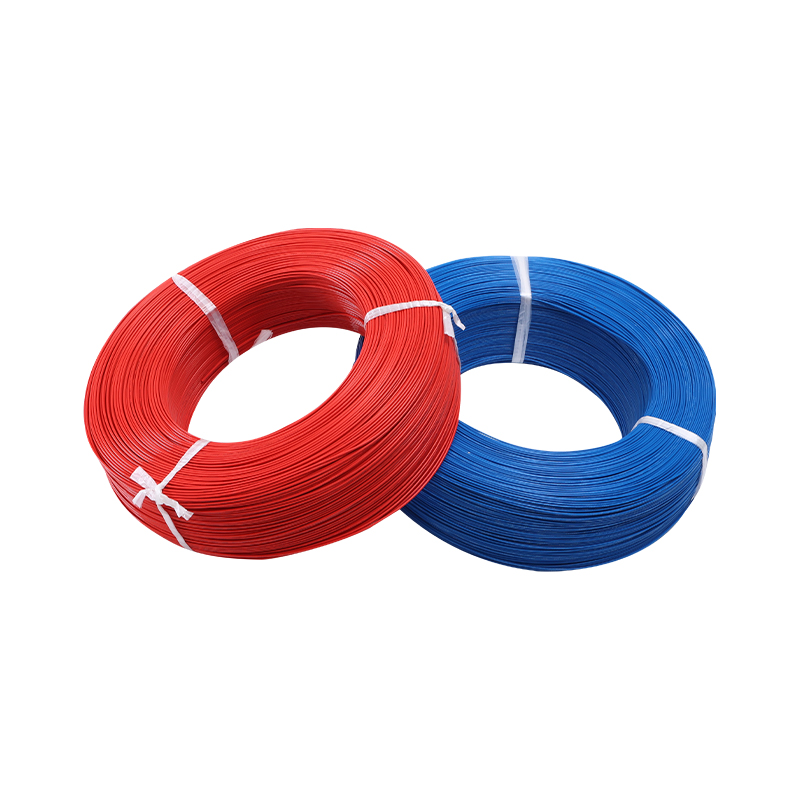 UL3266 300V XLPE Insulated Electrical Equipment Connection WireCertified under UL with 300V rating and 125°C temperature resistance, this wire supports solid or stranded tin-plated copper conductors from 32 to 10 AWG, making it a reliable choice for demanding industrial connections.View Product →
How to evaluate a custom cable manufacturer
When the cable is custom, the supplier's capability is effectively part of the specification. Ask direct questions before sending a drawing.
- Confirm the manufacturing scope. Does the supplier make the wire in-house, including insulation extrusion, or do they only buy wire and assemble harnesses? In-house extrusion means the supplier can adjust insulation thickness, color, or formulation to meet your requirement.
- Review the quality management system. ISO 9001 is the baseline. IATF 16949 indicates automotive-grade controls, and even for non-automotive buyers it enforces stricter process discipline and traceability.
- Ask for testing and traceability records. A reliable manufacturer should provide test reports for conductor resistance, insulation resistance, and voltage withstand. For cable that sees continuous heat, aging test data shows how the insulation retains elongation and tensile strength after thermal exposure.
- Evaluate the equipment base and technical team. A supplier with extensive production equipment and a dedicated technical team can handle small pilot runs and large production orders, and can support design revisions without waiting for a long development cycle.
Real applications where custom industrial cables make the difference
High-voltage motor leads
Motors are a classic example where custom cable matters. The lead wire must survive voltages from 1000 V to 10000 V, withstand the heat of the winding, and remain flexible enough to be routed without cracking during assembly. Silicone rubber motor lead wires are common because they maintain insulation properties at high temperature and stay soft.
For lower-voltage motors, a 1000 V silicone lead wire is sufficient. For larger machines, 3000 V or 6000 V versions are required. Choosing the right voltage class is not just about safety margin; higher voltage classes have thicker insulation, which increases overall diameter and makes routing harder in tight frames.
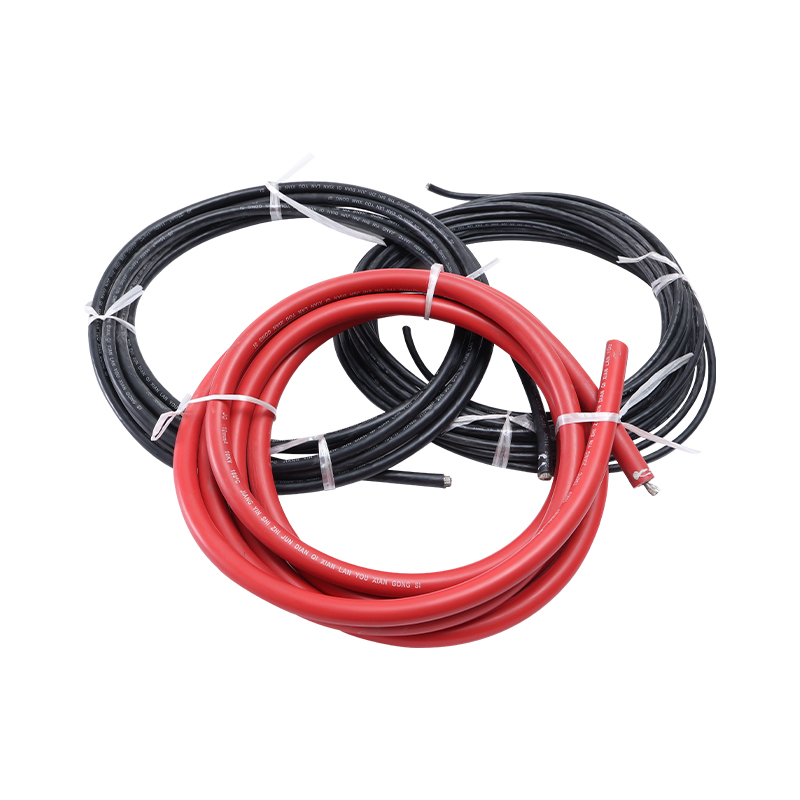 JG 1000V Silicone Rubber Motor Winding Lead WireRated for 1000V and -60°C to +200°C, this silicone rubber lead wire offers flexibility and chemical resistance, suitable for motor and transformer connections in medium-voltage applications.View Product →
Harsh-environment equipment
In industrial machinery, cables often sit near heat sources, oils, or vibration. Irradiated crosslinked wires are a strong match for electrical equipment connections in compact panels, where they must be routed tightly but also resist heat. The UL3266 300V electrical equipment connection wire with XLPE insulation is one such example.
Multicore control and power cables
For a machine that needs multiple signal and power lines in one sheathed cable, a silicone rubber multicore cable reduces installation time and protects the wires together. The YGZ heat-resistant silicone rubber multicore sheathed cable is one example, with a jacket that withstands high temperature and supports flexible routing.
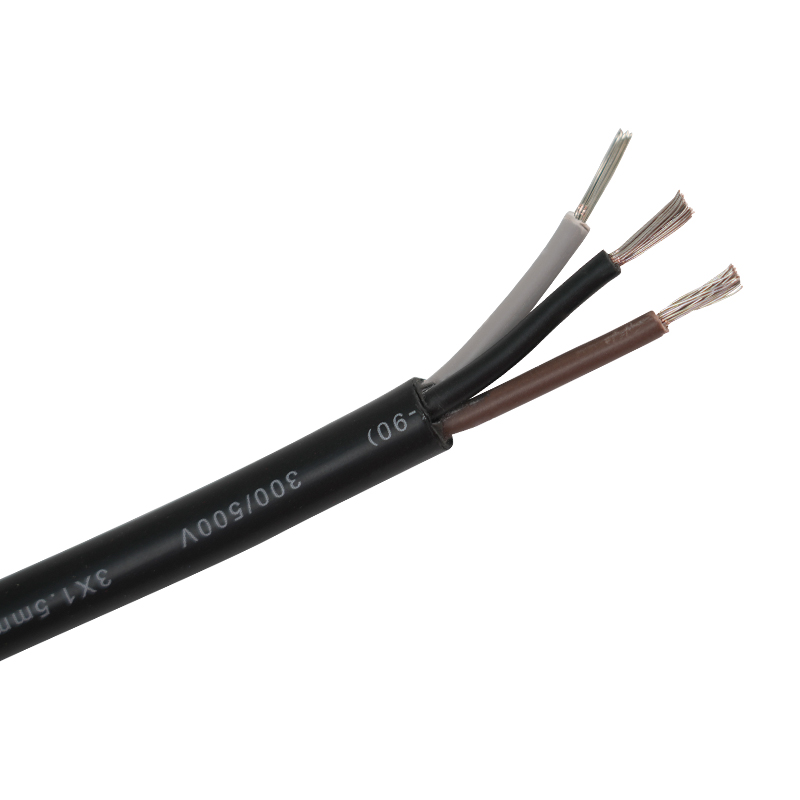 YGZ Heat-Resistant Silicone Rubber Multi-Core Sheathed CableWith 600/1000V rating and -60°C to +180°C temperature range, this silicone sheathed multicore cable combines flexibility and durability for high-temperature machinery and mobile equipment.View Product →
Procurement questions that protect your production schedule
Once the specification is clear, a few practical questions prevent surprises later.
- Ask about dimensional tolerance. Insulation thickness and overall diameter vary within defined limits. When a harness goes into a tight connector, tolerances must be known in advance.
- Ask about minimum order quantity and how the supplier handles small pilot runs. A good custom cable manufacturer accommodates sample quantities for design validation, then scales up without changing the material or process.
- Ask about documentation: RoHS and REACH declarations, UL and VDE certificates, and material data sheets. These are not optional in industrial procurement, and missing documents can delay your own compliance audit.
The practical bottom line
Custom industrial cables are not about choosing the most expensive option. They are about choosing the smallest cable that satisfies the electrical, thermal, and mechanical requirements of a specific application, and then selecting a manufacturer that can produce that cable consistently. When the insulation, conductor, voltage class, and certification are specified together, the cable performs, the product passes qualification, and the supply chain stays predictable.