English
 عربى
عربى Español
Content
Your product is packed tightly, the ambient temperature near the heating element exceeds the rating of standard PVC wire, and the routing path needs four conductors in one jacket. Off-the-shelf cables cannot meet that combination. This is the situation where a custom multi conductor cable becomes the most practical engineering choice.
A custom multi conductor cable is not simply several wires taped together. It is a defined construction: individual insulated conductors laid up, filled if necessary, and enclosed in one outer sheath. When you order a custom design, you control conductor size, stranding, insulation material, shielding, jacket material, and the certifications that allow the finished product in your target market. This article explains those decisions in the order that affects cost and performance.
What a Multi Conductor Cable Actually Is
By definition, a multi conductor cable contains two or more insulated conductors under a common jacket. The conductors do not have to be identical. One can be a drain wire, several can carry power, and others can carry signal or control circuits. The difference between a custom multi conductor cable and a bundle of single-core wires is the integration: a specified stranding, consistent lay length, controlled overall diameter, and a jacket that protects the whole bundle.
Single-conductor cables give you some routing flexibility, but they create a larger bundle, more opportunities for mechanical damage, and much longer stripping and terminating times during production. A custom multi conductor cable compresses all of that work into a single component.
Five Decisions That Control the Performance of Your Custom Cable
Conductor Gauge and Stranding
Conductor cross-section is determined by current-carrying capacity and acceptable voltage drop. For a given current, larger copper reduces resistive loss but increases cost and diameter. Stranding matters every bit as much. High flexibility in normal operation requires fine stranding, usually Class 5 or Class 6 in the European system or 19/0.16-type constructions in North American practice. Solid or coarse-stranded conductors are cheaper but break after repeated flexing.
Insulation Material
Insulation selection starts with the maximum continuous temperature and the voltage rating. PVC is common for 70°C to 105°C applications, costs little, and has good mechanical properties. Silicone rubber extends the range to 150°C and higher while staying flexible at low temperatures. Teflon-type fluoropolymers handle 200°C and aggressive chemicals. Irradiation cross-linked XLPE or XLPO allows a thin wall with high-temperature resistance, which can reduce the overall cable diameter. A more detailed comparison of PVC insulation behavior is available in our explanation of PVC insulated wires.
Shielding and Drain Wires
If the cable carries data or a critical control signal, shielding must be specified at the drawing stage. A braided shield gives good coverage and a robust drain path. Foil shields give 100% coverage but less flexibility. Shielding affects diameter, bend radius and termination method, so it cannot be added later without redesign.
Jacket Material
The jacket determines resistance to abrasion, chemicals, flame, water and oil. PVC jackets are standard for indoor household appliance wiring. Silicone jackets are used for high-temperature or food-contact zones. Polyurethane jackets are specified where physical abuse is a risk. The jacket must be compatible with the insulation; some combinations require fillers to make the cable circular and stable.
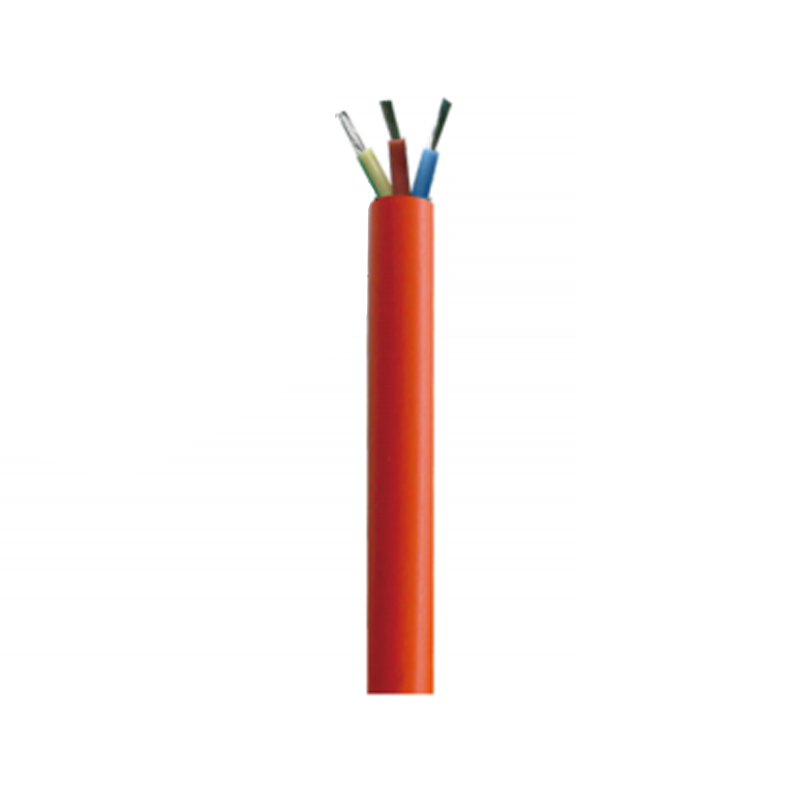 60227IEC53 RVV PVC Sheathed Flexible Cable for Dynamic ApplicationsThis national-standard PVC sheathed cable with stranded copper conductors suits frequent movement and tight bends. Its jacket resists oil, acid, and alkali, making it reliable for indoor or outdoor power distribution, lighting, and portable equipment.View Product →
Cores, Fillers and Overall Geometry
The number of cores and their arrangement change the final diameter and flexibility. Fillers create a round profile for the jacket, improving compression resistance and making automated stripping easier. Flat or oval constructions can be chosen for tight spaces. For a custom multi conductor cable for a particular appliance, the cross-section is designed around the connector layout and the available routing space.
Match the Cable Materials to the Environment
Temperature is the first criterion. A cable's temperature rating is set by the least heat-resistant component. A 105°C insulation with a 70°C jacket is still a 70°C cable. Chemical exposure, humidity, UV and flex cycling must all be listed before a quotation is accurate.
Here is a practical comparison of insulation families used in custom multi conductor cable for household, motor and automotive equipment:
| Material | Continuous temperature | Typical use |
|---|---|---|
| PVC | 70–105°C | Indoor appliances, electronic equipment |
| Silicone rubber | 150°C+ | Ovens, heaters, motor leads |
| Teflon (FEP/PFA) | 200°C | High-heat or chemical-resistant leads |
| XLPE/XLPO | 125–150°C | Thin-wall motor and automotive wiring |
After the insulation comes the jacket. A silicone-jacketed multi conductor cable is often specified when both the cores and the outer sheath must survive continuous high heat. The YGZ silicone rubber multicore sheathed cable is one construction used for that condition.
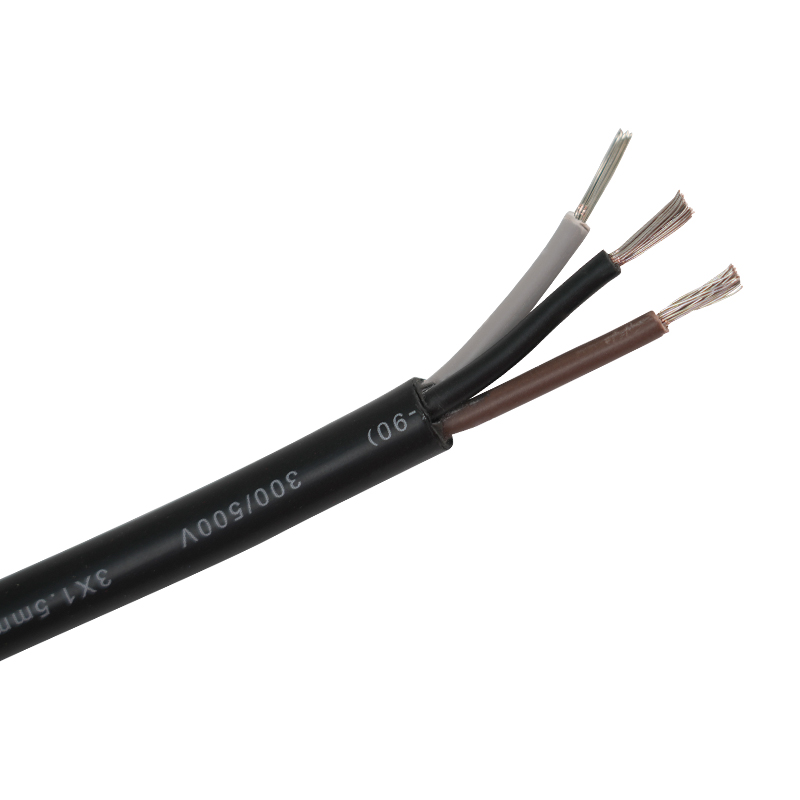 YGZ Silicone Rubber Multi-Core Sheathed Cable for High HeatRated for -60°C to 180°C and 600/1000V, this flexible silicone-sheathed cable handles continuous high temperatures in metallurgy, robotics, solar, medical, and appliance environments. Its construction supports durable performance where cores and outer sheath must survive extreme conditions.View Product →
Certifications Change the Supplier Options
Before approving any custom multi conductor cable, verify which certifications are required in the destination country. UL for North America, VDE for Europe, CCC or CQC for China, PSE for Japan, KC for Korea. Appliances sold through normal distribution channels usually need cables that are covered by one of those systems. A supplier with current UL style pages, VDE approvals and a quality system such as ISO 9001 or IATF 16949 will shorten the approval process considerably.
Ask for the exact standard and confirm that the cable construction you need is included on the certificate. A custom design that falls outside a recognised style may require additional tests, which affects both cost and lead time.
Tolerances, Samples and Production Quality
Custom cables do not have infinite production tolerance. Insulation outer diameter, conductor DC resistance, jacket wall thickness and lay length all have acceptable ranges. A proper drawing should state them. On the first sample, measure conductor resistance, run a high-voltage withstand test, and check the overall diameter at several positions. Ask for the sample to be made with the same tooling that will be used in the production run.
A manufacturer with in-house extrusion, stripping and assembly capability will give you tighter control over these custom features. When the cable is going to be part of a final appliance, it is worth checking whether the same supplier also produces the wiring harness. That reduces handling, storage, and quality-interface risk.
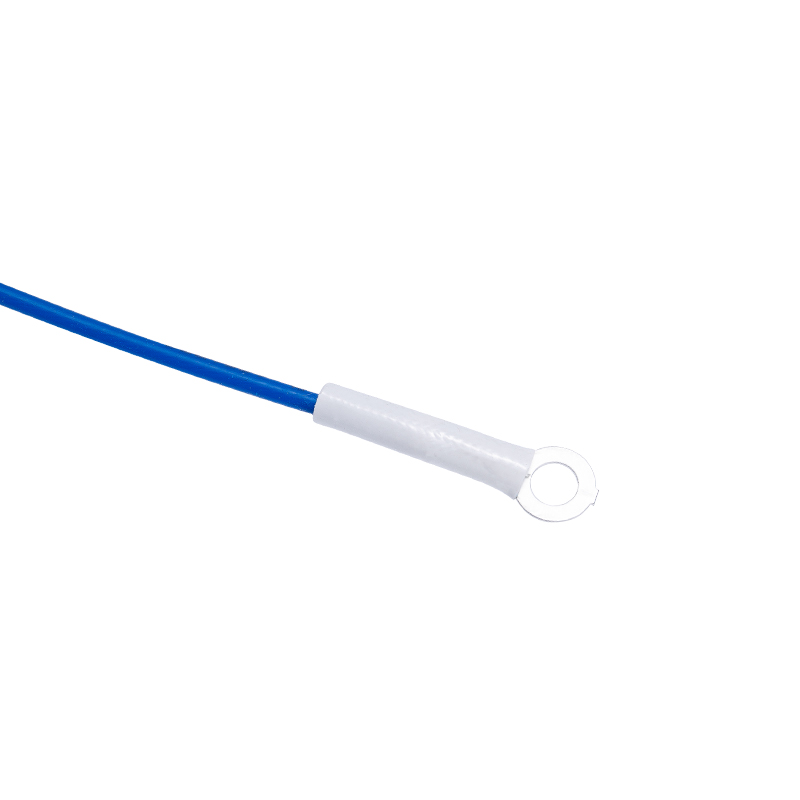 High-Temperature Resistant Wiring Harness for Oven ApplicationsThis harness connects heating elements, thermostats, motors, and controls inside ovens where temperatures can exceed 200°C. Built with PTFE, silicone, or fiberglass insulated tinned copper leads, it provides stable power transmission and flame resistance for safe appliance operation.View Product →
A Practical Ordering Workflow
Follow this order when you request a custom multi conductor cable quote:
- Define the environment: maximum ambient temperature, exposure to oil, chemicals, UV and moisture, number of flex cycles.
- List the electrical requirements: voltage, current per conductor, shielding, acceptable voltage drop.
- Choose conductor size and stranding class based on current and bend radius.
- Select insulation and jacket materials using the temperature and compatibility table above.
- Specify the standards and certifications, including UL, VDE, CQC or customer-specific requirement.
- Provide connector, stripping length, terminal and any harness assembly details.
- Ask for a sample and approval drawing before committing to mass production.
Following this workflow makes the custom multi conductor cable project easier for both your engineering team and the manufacturer. It also shortens the quotation cycle because the cable maker can work from a complete specification instead of guessing.
Custom multi conductor cable is a specification decision, not a catalog lookup. The right combination of conductor, insulation, shield and jacket must come from your operating environment and compliance target. When you bring a clear drawing to a manufacturer with in-house cable extrusion and harness assembly, you can move from prototype to reliable production part quickly.
Start with a physical sample, measure it carefully, and only then consider larger volumes.