English
 عربى
عربى Español
Content
- 1 What Fiberglass Wire Sleeving Actually Does
- 2 The Main Types of Fiberglass Wire Sleeving
- 3 How to Compare Sleeving Specifications
- 4 Where Fiberglass Wire Sleeving Earns Its Place
- 5 Fiberglass Sleeving Versus Other Protective Sleeving
- 6 When the Glass Braid Is Built Into the Wire
- 7 Choosing a Sleeving and Wire Supplier
- 8 Common Questions About Fiberglass Wire Sleeving
Fiberglass wire sleeving is the quiet workhorse of high-temperature electrical design. It is a braided glass fiber tube that slides over a conductor, a lead wire, or a whole bundle, keeping heat, abrasion, and voltage where they belong. If you have ever opened an air fryer, a spa heater, or a motor terminal box, you have almost certainly seen one.
After more than twenty years of building insulated wire and appliance harnesses, we have learned that most sleeving problems are not caused by the sleeve itself. They come from ordering the wrong wall thickness, the wrong inner diameter, or a braid that frays the moment it is cut. This guide walks through the sleeve types you will meet in the market, the numbers that actually matter, and the questions worth asking before you place a purchase order.
What Fiberglass Wire Sleeving Actually Does
A sleeve is not decoration. In a real appliance or motor, it performs several jobs at once, and the one you care about most depends on where the wire runs.
- Thermal separation: it keeps radiant heat from a heating element away from PVC, XLPE, or silicone insulation that might otherwise soften or age.
- Abrasion protection: it stops vibration and stamped metal edges from rubbing through the primary insulation over thousands of cycles.
- Dielectric margin: it adds an extra insulating barrier between a live lead and grounded metal parts.
- Bundle control: it gathers individual leads into a tidy, flexible unit, so a harness drops into a housing without pinching.
Construction matters as much as material. A loosely braided sleeve expands easily but frays badly after cutting, while a tightly braided sleeve holds its shape but may be harder to slide over a connector. That trade-off is exactly why silicone-coated versions exist: the silicone locks the braid together, seals the cut end, and adds a smooth surface that resists moisture and dust.
The Main Types of Fiberglass Wire Sleeving
Most projects land in one of four categories. The table below summarizes how they differ in construction, thermal capability, and typical application.
| Type | Construction | Typical Continuous Rating | Where It Fits Best |
|---|---|---|---|
| Plain braided fiberglass sleeve | Uncoated braided glass yarn, often 0.5 to 3.0 mm wall | Up to roughly 500 degrees Celsius, limited by any sizing or binder | Heater leads and very hot zones where dry heat resistance matters more than moisture protection |
| Silicone-coated fiberglass sleeve | Braided glass fiber with a silicone coating that locks the weave | Around 200 degrees Celsius | Appliance and motor wiring near heating elements, where clean cut ends and low fraying are required |
| Silicone rubber glass fiber braided tubing | Thicker silicone rubber wall reinforced with a glass braid | Around 180 to 200 degrees Celsius | High-voltage and high-pressure leads, plus wiring that flexes repeatedly |
| Fiberglass braided wire | Glass braid applied directly over the conductor insulation as part of the wire | Depends on the insulation system, commonly 150 to 200 degrees Celsius | Leads such as UL3122, UL3231, and 60245IEC03(YG) styles, where the sleeving is built in |
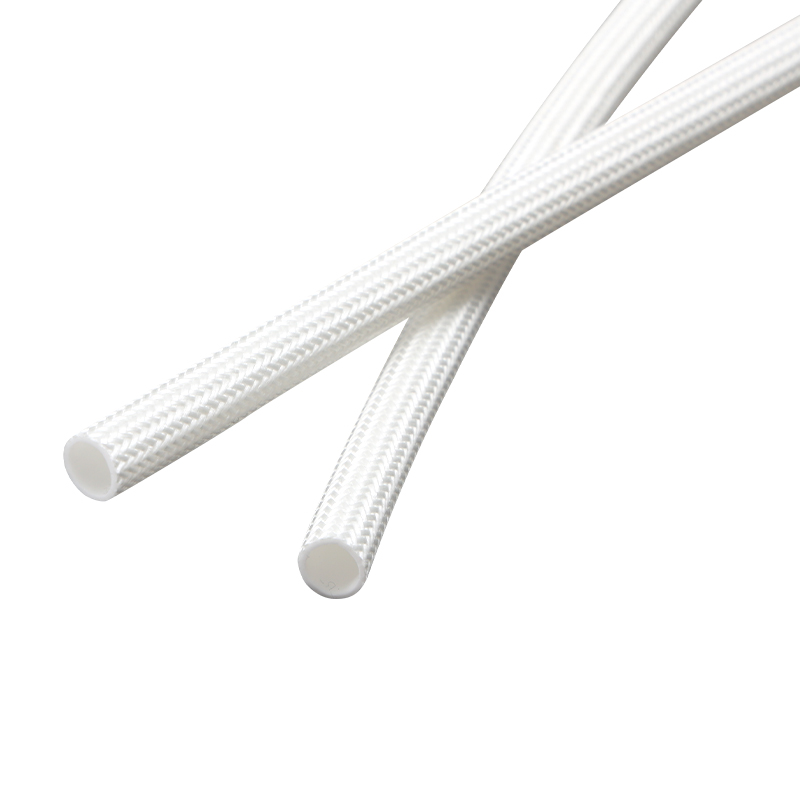 Silicone Fiberglass Sleeve High Temperature Resistant Silicone Coated Glass Fiber Braided Silicone fiberglass braided sleeving is a high-performance insulation material widely used in high temperature, corrosive environments and places requiring high mechan...View Product →
How to Compare Sleeving Specifications
Catalog pages look similar, but the details decide whether a sleeve survives ten years or ten weeks. These are the points we check first when a customer sends us a drawing.
- Inner diameter and expansion range: the sleeve must slip over the largest connector but still grip the bundle once positioned.
- Wall thickness: thicker walls raise dielectric strength and abrasion resistance, but reduce flexibility and take up space.
- Continuous versus peak temperature: a short excursion is not the same as a permanent operating condition.
- Dielectric strength: relevant whenever the sleeve sits between a live conductor and metal hardware.
- Fray resistance: ask how the cut end behaves, especially on automatic cutting and stripping lines.
- Chemical and moisture resistance: silicone coatings help, but oils, detergents, and steam all behave differently.
- Compliance: UL, VDE, CCC, RoHS, and REACH status often decide whether a part can ship at all.
Sizing in Four Steps
- Measure the finished outer diameter of the conductor or bundle, including any existing insulation.
- Add clearance for connectors and solder joints, then select the smallest sleeve that still passes over them.
- Check the bend radius at each corner of the routing; a stiff sleeve can force a wire into a tight, damaging curve.
- Confirm the cut length, because sleeving is usually ordered to a finished dimension rather than a spool length.
If the sleeve and the wire are being selected at the same time, it helps to review the main types of high-temperature wire before locking the assembly drawing, since the insulation system and the sleeve should be rated for the same environment.
Where Fiberglass Wire Sleeving Earns Its Place
The heaviest demand we see comes from heating appliances. Inside an oven, an air fryer, or a pressure cooker, a short lead often runs within a few centimeters of a element, and a silicone-coated glass sleeve is the simplest way to protect it. Bathroom heaters and steam and bake machines follow the same logic, with moisture added to the heat.
Motors are the second big arena. Motor winding leads carry high voltage, are pulled through narrow slots, and vibrate for years, so the sleeve has to be both dielectric and mechanically tough. Automotive high-voltage cable runs bring a third set of requirements: tight bend radii, chemical exposure, and the documentation discipline of an IATF 16949 supply chain.
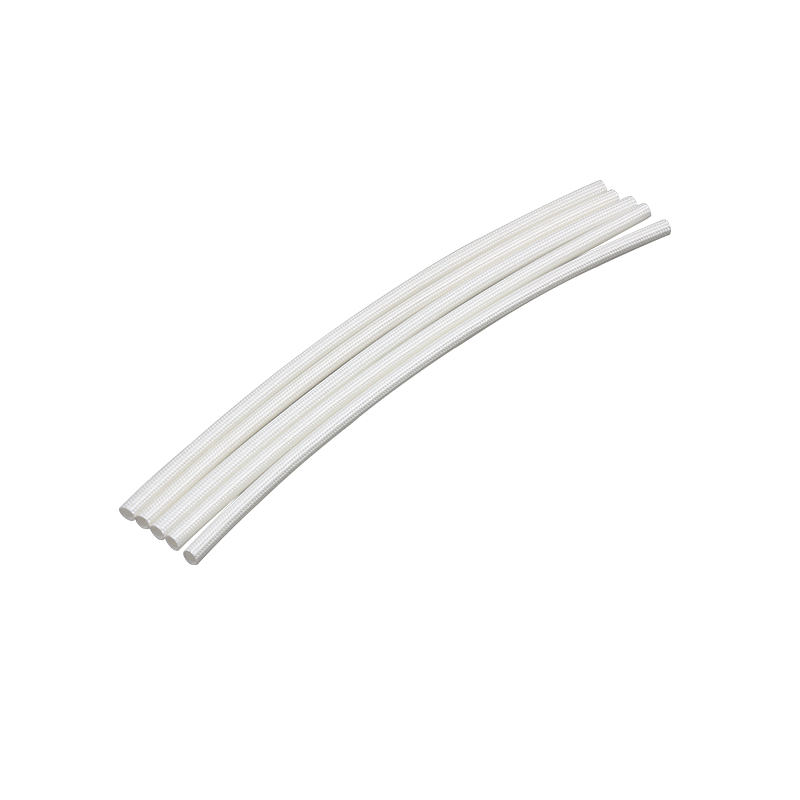 Silicone Fiberglass Braided Silicone Tube High Pressure And High Temperature Resistant GlaSilicone fiberglass braided silicone tube is a widely used high temperature resistant tube. It can work at -60°C to 200°C for a long time. The certification standard i...View Product →
Fiberglass Sleeving Versus Other Protective Sleeving
Fiberglass is not the only option, and choosing the wrong family is an expensive way to learn the difference.
- Silicone rubber tubing: excellent flexibility and sealing, but lower temperature ceiling and softer against sharp edges.
- PVC heat shrinkable tubing: easy to install and good for strain relief, but limited to low temperatures and less suitable near heaters.
- PTFE and FEP sleeves: outstanding chemical and thermal performance with a very low friction surface, at a higher material cost.
- Glass fiber sleeves: the strongest combination of high temperature tolerance, abrasion resistance, and cost when dry heat is the main threat.
In many harnesses the answer is a mix. A glass fiber sleeve covers the hot section, a short length of heat shrink secures the breakout, and a silicone tube handles the flexible joint near the terminal.
When the Glass Braid Is Built Into the Wire
Sometimes there is no separate sleeve at all. In braided silicone rubber wire, the glass fiber braid is applied directly over the insulation during the stranding and extrusion process, producing a finished lead that already has its outer protective layer. The result is a thinner, more consistent assembly than a wire plus a hand-applied sleeve, and the braid cannot shift during routing.
This construction is common in appliance harness processing wire, in lighting and heater leads, and in equipment that needs a tough outer surface without extra bulk. The trade-off is that the braid is fixed at the factory, so the temperature class, color, and diameter must be decided before production rather than on the assembly line.
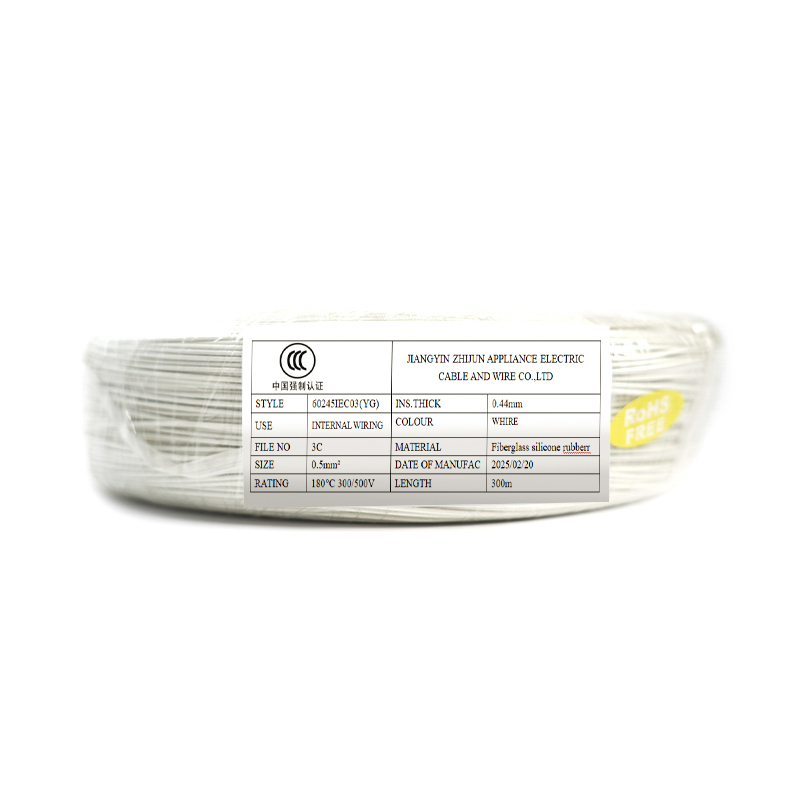 60245IEC03(YG) Glass Fiber Braided High Temperature Resistant Wire Harness Processing Wire60245IEC03(YG) is a specific type of braided silicone wire, which is usually used for electrical connections in high temperature environments. Here is some basic infor...View Product →
Choosing a Sleeving and Wire Supplier
The practical advantage of buying sleeving and wire from one source is that someone has to answer for the whole assembly. When a harness fails a temperature test, it is far easier to fix when the sleeve, the conductor, and the terminal were specified together.
At Zhijun Cables, we manufacture silicone rubber, PVC, irradiated crosslinked, and Teflon insulated wires, together with glass fiber braided leads, protective sleeves, and complete appliance wiring harnesses. Our ISO 9001 and IATF 16949 systems, along with UL, VDE, CCC, and CQC product approvals, mean a sleeve order arrives with the same traceability as the wire it protects. Send us a drawing with the operating temperature, voltage, and routing, and we will recommend a sleeve and conductor combination that fits the application rather than the catalog page.
Common Questions About Fiberglass Wire Sleeving
Can fiberglass sleeving be cut to length on site?
Yes, but use sharp shears or a hot knife and expect some dust from uncoated braid. Silicone-coated sleeves cut far more cleanly and are the better choice when the work is done at an assembly station.
Is a higher temperature rating always better?
Not necessarily. Higher-rated constructions are often stiffer and thicker, which can make routing harder and cost more. Match the rating to the real continuous temperature at the wire, not to the worst case on paper.
How do I stop a sleeve from sliding along the harness?
Secure it with a short length of heat shrinkable tubing at each end, or specify a sleeve whose expanded diameter grips the bundle. Loose sleeves chafe, and chafing defeats the purpose of the part.
Fiberglass wire sleeving is simple in principle and surprisingly easy to get wrong in practice. Decide what the sleeve has to survive, size it against the finished bundle rather than the bare conductor, and confirm that its rating matches the insulation system around it. Do that, and the smallest component in the harness will quietly do its job for the life of the product.
If you are working through a new design or replacing a part that keeps failing, our team is happy to review the drawing and suggest a construction. Small samples are usually the fastest way to settle the question.