English
 عربى
عربى Español
Content
- 1 Why Multi-Conductor Cable Color Codes Matter
- 2 The ICEA and NEMA Framework for Control Cables
- 3 Method 1, Table E-1: Solid Colors for the First Six Conductors
- 4 Method 1, Table E-2: Base Colors, Tracers, and the 36-Conductor Limit
- 5 Paired Cables: The ICEA Paired Color Code
- 6 Practical Guidance for Specifying and Terminating Colored Cables
A maintenance engineer opens the terminal box of a production machine and finds a 12-core cable with no wire numbers, only colored insulation. Within seconds, the color code tells that person which conductor is neutral, which is protective earth, and which carries a control signal. Multi-conductor cable color codes are not decorative; they are a standardized identification system that directly affects installation time, troubleshooting speed, and electrical safety.
The codes used throughout North America come mainly from standards published by the Insulated Cable Engineers Association (ICEA) and adopted by the National Electrical Manufacturers Association (NEMA). Whether you terminate cables on a machine, build control panels, or specify cables for OEM equipment, knowing how these color sequences work will keep your wiring consistent and code-compliant.
Why Multi-Conductor Cable Color Codes Matter
Color coding is the fastest and most durable way to identify conductors inside a cable jacket, and it has a direct effect on three practical concerns.
- Safety. The National Electrical Code (NEC) is unambiguous about the two most important colors: white or gray identifies the neutral conductor, and green, or bare copper, identifies the equipment grounding conductor. Respecting these two rules prevents the most common and the most dangerous wiring mistakes in industrial equipment.
- Efficiency. A technician who can read the color code can terminate a 36-conductor cable without continuity-testing every wire. That translates into shorter downtime during repairs and fewer errors during new installation.
- Traceability. In manufacturing, a standardized color sequence lets quality inspectors verify that every conductor is landed on the correct terminal before the machine is energized. This is especially important in high-volume control cable production.
The ICEA and NEMA Framework for Control Cables
ICEA publishes the color standards used by most multi-conductor cable manufacturers in the United States, and NEMA adopts them through the WC-70 standard for power and control cables. When a datasheet references Method 1, Table E-2, it is referring to the NEMA/ICEA method that governs conductor identification.
The framework works at two levels. Method 1, Table E-1, referred to as K-1 in NEMA notation, assigns one solid color to each conductor and is used for cables with up to six conductors. Method 1, Table E-2 (K-2) extends the same idea to 36 conductors by combining base colors with tracer stripes. Most multiconductor control cables in the 14 AWG to 10 AWG range use Method 1, Table E-2.
One point worth remembering: many control cables deliberately omit white and green conductors. Because white and green are reserved by the NEC for neutral and grounding, a cable intended for control circuits often skips those colors so that nobody mistakes a signal wire for a power conductor.
Method 1, Table E-1: Solid Colors for the First Six Conductors
Under Method 1, Table E-1, the first six conductors in a multi-conductor cable are identified with solid insulation colors, as shown below. This sequence covers the large majority of standard 2-core to 6-core cable specifications.
| Conductor | Insulation Color |
|---|---|
| 1 | Black |
| 2 | Red |
| 3 | White |
| 4 | Green |
| 5 | Orange |
| 6 | Blue |
When a cable design needs more than six conductors, manufacturers switch to the E-2 system, which is the more important table for control wiring.
Method 1, Table E-2: Base Colors, Tracers, and the 36-Conductor Limit
Table E-2 builds on the same idea but adds three more base colors: brown, yellow, and violet, for a total of nine. Each base color can receive a tracer stripe in a contrasting color, generating 36 unique combinations before the pattern repeats. A black conductor with a white stripe is therefore a different conductor from a plain black one, and the sequence continues until all 36 combinations are used.
Thirty-six combinations are enough for most industrial control cables. A 20-pair or 30-conductor cable can have every conductor positively identified by its insulation colors alone. Beyond 36 conductors, colors repeat, so manufacturers use printed numbers, surface printing, or numbered ferrules to eliminate ambiguity. If your cable does include a white or green conductor, treat those as neutral and ground unless the wiring diagram explicitly assigns them otherwise.
When you order a multicore cable, the supplier should provide a color sequence table with the cable documentation. A standard 60227IEC53 (RVV) PVC-sheathed flexible cable uses this kind of standard color arrangement, and the same identification logic applies to most PVC multicore cables used in electrical equipment.
 60227IEC53 RVV National Standard Certified Pvc Installation Sheathed Wire SuppliJiangyin Zhijun Appliance Electric Cable and Wire Co.,ltd is China Custom 60227IEC53 RVV National Standard Certified Pvc Installation She...View Product →
Paired Cables: The ICEA Paired Color Code
Multi-pair cables, used for instrumentation, communication, and control signals, identify pairs rather than individual conductors. Twisting the two legs of each pair improves noise rejection, and the color code ensures that both ends of the same pair are connected to the same signal path. In the ICEA paired color code, each pair has a first leg with a distinctive color and a second leg that is white. The starting sequence is shown below.
| Pair Number | Leg 1 Color | Leg 2 Color |
|---|---|---|
| 1 | Black | White |
| 2 | Red | White |
| 3 | Green | White |
| 4 | Orange | White |
| 5 | Blue | White |
In larger multi-pair cables, the leg 1 color continues through brown, yellow, and violet, and the pair number is printed on the jacket so that 20-pair or 50-pair cables can be terminated without confusion.
It is worth noting that the telephone industry uses a different 25-pair color code, with white, red, black, yellow, and violet as major colors, and blue, orange, green, brown, and slate as minor colors. That system produces pairs such as white/blue and white/orange, and it is not interchangeable with the ICEA paired code used in instrumentation cables.
Practical Guidance for Specifying and Terminating Colored Cables
Reading the color code is only half the job; the other half is confirming that the cable you received matches the documentation. Here is the sequence that works on the shop floor.
- Check the datasheet or certificate supplied with the cable. The manufacturer should state the color sequence, the applicable standard, and the number of cores.
- Inspect the cable ends before termination; if any conductor has a non-standard color, flag it before stripping begins.
- For cables with more than six conductors, use numbered ferrules at both ends so the color sequence remains traceable after lacing and dressing.
- When you replace a damaged cable, match the color code of the original installation rather than switching to a similar-looking sequence.
Color codes also matter when you are selecting the right gauge and conductor type for a new application. A cable that is mechanically correct but has an unreadable or non-standard color pattern can slow down installation and create risk during the final inspection.
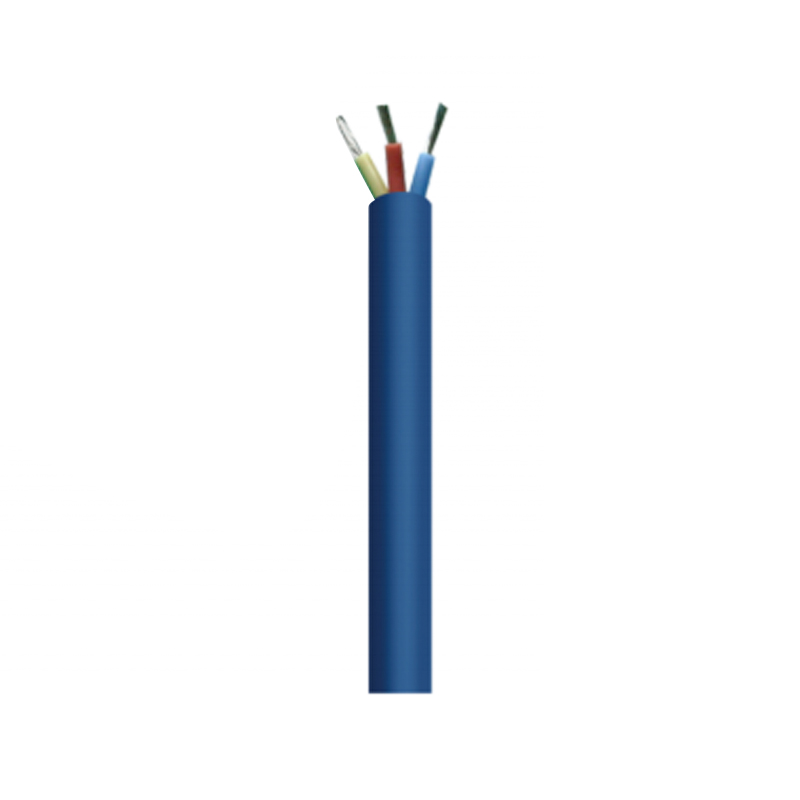
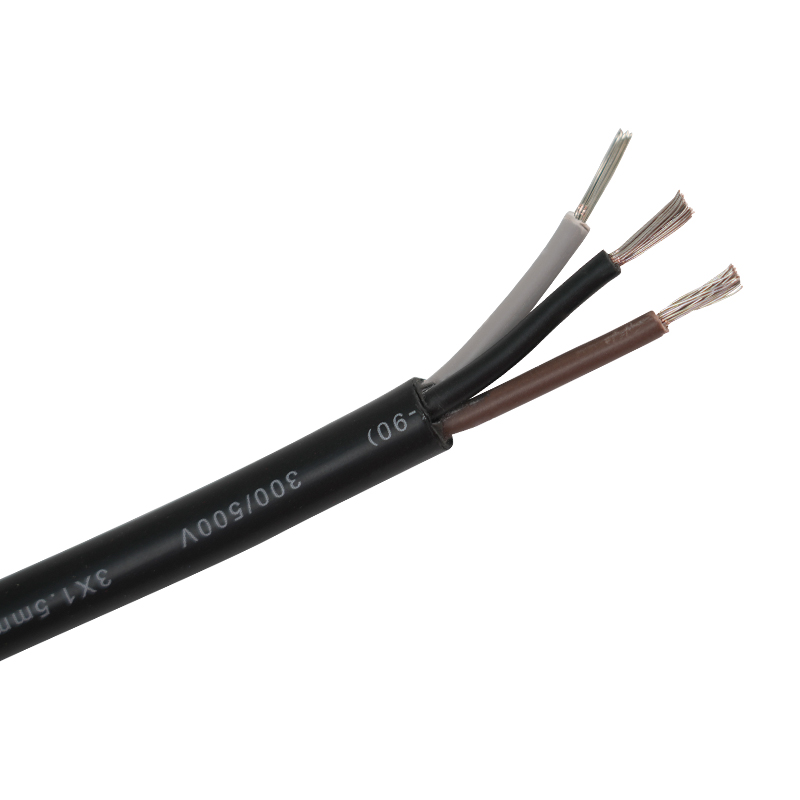
In high-temperature environments, the same color identification rules apply, but the insulation material changes. A heat-resistant silicone rubber multicore cable keeps its color coding even under continuous heat, which is one reason silicone insulation is specified for ovens, motors, and lighting fixtures. For lower-current connections inside household appliances, a flexible 60227IEC52 (RVV) connecting wire is a common choice, and its conductor colors follow the same standardized sequence.
 60227IEC52 RVV 3C Certified PVC Sheathed Flexible Wire For Connection Suppliers,Jiangyin Zhijun Appliance Electric Cable and Wire Co.,ltd is China Custom 60227IEC52 RVV 3C Certified PVC Sheathed Flexible Wire For Conn...View Product →
 YGZ Heat-Resistant Silicone Rubber Multi-Core Sheathed Cable Suppliers, FactoryJiangyin Zhijun Appliance Electric Cable and Wire Co.,ltd is China Custom YGZ Heat-Resistant Silicone Rubber Multi-Core Sheathed Cable Su...View Product →
The final rule is simple: if the colors are not what you expect, stop and verify before energizing. When the color code is respected at every splice, junction box, and terminal strip, the machine is safer, easier to maintain, and far more likely to pass inspection.